
Why Cava deserves better than its image
Cava is one of those wines that many people think they know — while often reading it very poorly. In the public imagination, it is still associated with an image that can feel too simple, sometimes too entry-level, as if it were merely a practical, festive and accessible sparkling wine, but rarely a true subject of tasting.
That reading is reductive. Spanish Cava cannot be reduced either to its price positioning or to a convenient alternative to other sparkling wines. It is a structured, regulated and technically demanding category, and far more diverse than many people realise. Behind a name that seems familiar lies a genuine richness of grape varieties, styles, ageing levels and quality interpretations.
That is precisely what this article aims to explore. Not to defend Cava on principle, but to better understand what it really is. Where does it come from? How is it made? Which grapes shape it? What styles can it take? What do its different quality categories really mean? And which dishes does it work best with?
In other words, the aim here is to give Cava — Spain’s sparkling wine — its full place back: not as just one option among others, but as a category in its own right, with its own logic, identity and real tasting stakes.
1. What exactly is Cava?
Cava is first and foremost a Spanish sparkling wine made according to the traditional method, which means a second fermentation in bottle. That is its essential foundation. Without this method, there is no Cava. And that is exactly what places it, from the outset, in a category that is more structured and more technical than its image sometimes suggests.
But to understand Cava properly, it is important to distinguish between three things that are often confused: the product category, the method, and the origin.
The product category is that of sparkling wine: a wine containing carbon dioxide produced naturally through fermentation rather than simply being added. The method here is the traditional method, which involves the second fermentation in bottle, ageing on lees, and then disgorgement. Finally, origin refers to the production framework for Cava as defined in Spain. In other words, Cava is not just a Spanish sparkling wine: it is a Spanish sparkling wine produced within a regulated framework, using a precise method and clearly defined criteria.
That is also why one first clarification is essential: Cava is not just “Spanish Champagne.” The comparison comes naturally because the two share the traditional method. But it quickly becomes reductive if it prevents Cava from being read on its own terms. Cava has its own grape varieties, its own history, its own geographical logic and its own styles. Reducing it to a Spanish version of Champagne strips it of its identity.
2. Where is Cava produced?
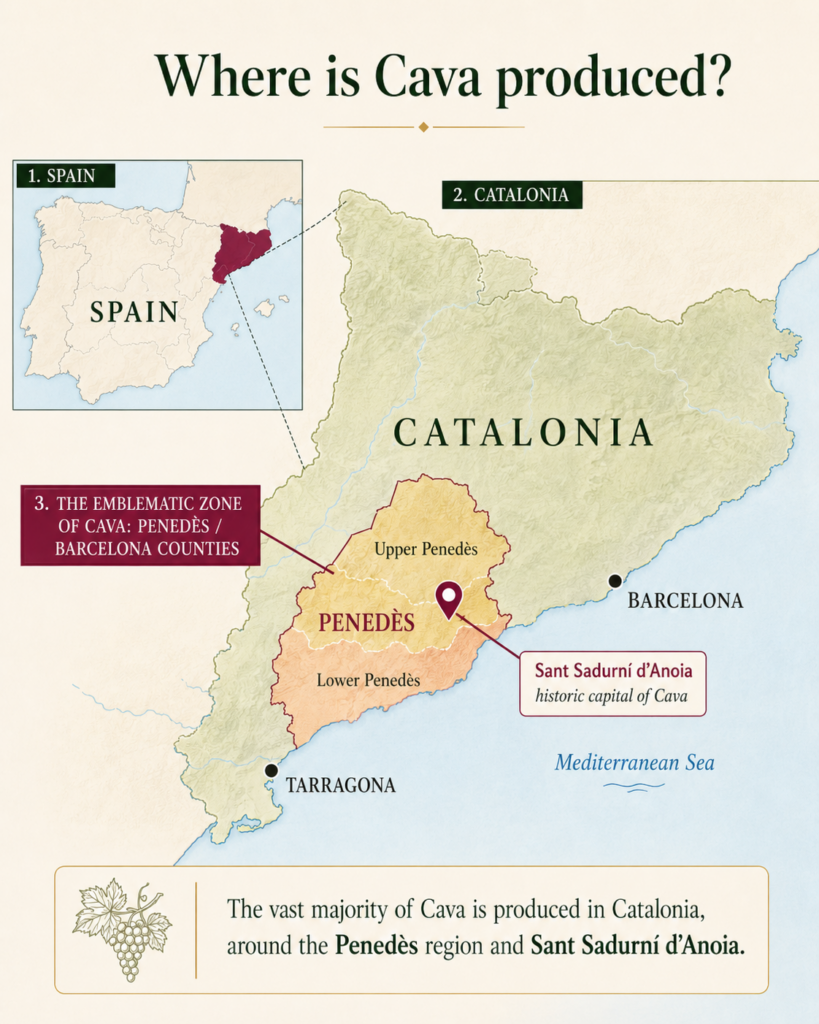
When people talk about Cava, they very often think of Catalonia. And that reflex is not wrong. Historically, the link between Cava and Catalonia is very strong, to the point that it still largely shapes the identity of the category. This is where the wine built its reputation, its historical legitimacy and a large part of its image, particularly around the town of Sant Sadurní d’Anoia, often seen as the symbolic and technical heart of Cava.
Located in the Penedès region, Sant Sadurní d’Anoia plays a central role in the history of Spanish sparkling wine. This is where the traditional method took root decisively at the end of the nineteenth century, and it is still where a major share of production is concentrated. For many wine lovers, Cava therefore remains instinctively associated with this Catalan area, and that association is still highly relevant today.
But this is exactly where an essential nuance needs to be introduced: Cava is not limited to a single, strictly continuous geographical area. Contrary to what people sometimes imagine, it is not an appellation drawn as one compact block around one unique territory. The authorised production area for Cava is more unusual than that. It includes several zones spread across different parts of Spain, including Navarre and La Rioja, even if Catalonia remains overwhelmingly dominant in practice.
This geographical singularity may seem confusing at first, but it is explained by history. Cava developed from a very strong Catalan core, and then retained a production framework that does not rely exclusively on the idea of strict territorial continuity.
This is an important point because it helps break a common simplification. No, Cava is not only “the sparkling wine of Penedès”, even if Penedès and Sant Sadurní d’Anoia remain its major reference points.
3. How is Cava made?
To understand Cava, it is necessary to go back to what defines it most clearly: its production method. Cava is made according to the traditional method, meaning with a second fermentation in bottle. This point is fundamental, because it is not just a technical detail: it is one of the elements that most strongly shapes the final style of the wine.
In concrete terms, after a first standard fermentation that produces a still base wine, the winemaker makes the blend and then adds a liqueur de tirage to trigger the second fermentation in bottle. It is this second fermentation that naturally creates the carbon dioxide and gives Cava its sparkle. This technical choice immediately distinguishes it from sparkling wines made using other methods, especially those in which the second fermentation takes place in tank.
But the traditional method does not stop at the bubbles. Once this second fermentation is complete, the wine remains in contact with its dead yeast cells: this is what is known as ageing on lees. This stage plays an essential role in the texture, complexity and depth of the wine. The longer this ageing lasts, the more Cava can develop notes of toast, brioche, hazelnut, cream or broader vinous depth. This is also where real stylistic differences begin to emerge between simpler categories and more ambitious cuvées.
Next comes disgorgement, the stage during which the sediment formed in the bottle is expelled after the lees have been gradually collected in the neck. This step makes it possible to obtain a clear wine ready for release, while preserving the qualitative effects of lees ageing. Once again, this is a process of technical precision: the style of Cava relies on a sequence of carefully controlled steps, not simply on the idea of a wine that “has bubbles”.
After disgorgement comes the dosage, meaning the possible addition of an expedition liqueur that adjusts the final sugar level of the wine. This is an important point, because dosage directly influences the perception of balance. A more highly dosed Cava will not read the same way as a drier Cava. It affects the sense of roundness, the readability of acidity and the gastronomic positioning of the wine.
This is precisely why the method matters so much in the final style. It does not only affect the presence of bubbles. It influences texture, mousse finesse, aromatic complexity, tension, palate weight and even the way the wine works at the table. To understand how Cava is made is therefore to understand that its identity does not rest only on its origin or its grape varieties, but also on a production technique that deeply shapes its profile.
4. Cava grape varieties: tradition and evolution
To understand the style of Cava, you need to look closely at its grape varieties. While the traditional method plays a decisive role, it does not explain everything. The personality of the wine is also built from the varieties used, their balance in the blend, and the way they interact with lees ageing. That is precisely what makes the subject interesting: behind the image of a fairly uniform sparkling wine, Cava actually rests on a rich varietal base, both traditional and evolving.
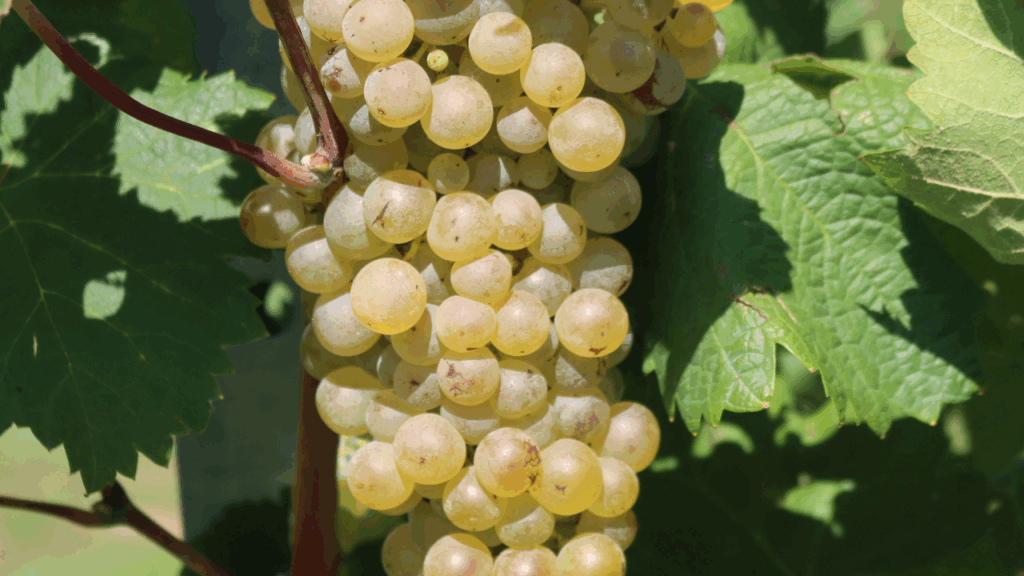
The three great historic grapes of Cava are Macabeo, Xarel-lo and Parellada. This trio forms the classic foundation of many Cavas, and each plays a very specific role:
- Macabeo often brings a certain softness of fruit, rather discreet but pleasant aromas, sometimes in the direction of apple, pear or delicate floral notes. It often plays a balancing role in the blend, giving roundness and accessibility.
- Xarel-lo, by contrast, is often considered one of the most structuring grapes in Cava. It brings more body, grip, acidity and ageing potential. It is especially important in more serious Cavas because it contributes depth and supports lees ageing particularly well.
- Parellada tends to work in a more delicate register. It brings finesse, freshness and a certain aromatic lightness. It can help give Cava a more airy, elegant and sometimes tauter profile.
To this historic core, other authorised varieties have been added, reflecting the evolution of the category and its openness to different interpretations of sparkling wine.
- Chardonnay is one of the most important. It can bring more roundness, volume, aromatic richness and sometimes a more international reading of style. In some blends, it also strengthens the wine’s ability to gain complexity with ageing.
- Pinot Noir plays a different role. It is often used for rosés, but it can also contribute to more vinous or more structured styles. It brings fruit, sometimes a little more flesh, and a more direct reading of certain contemporary sparkling profiles.
- Other grapes such as Trepat — lighter, fresher and more fruit-driven — or Monastrell — with more substance and intensity — remind us that Cava is not limited to one dry white register, but can also explore other expressions.
And this is exactly where the category becomes especially educational. It shows clearly that a sparkling wine is never defined only by its bubbles or by its method. It is also the result of very precise raw material: the grape varieties, their balance and their role in shaping the final wine.
5. The main Cava categories to know
One of the most useful ways to understand Cava is to know how to read its categories. Not all bottles play in the same register, and these distinctions are not just about marketing. They correspond to real differences in ageing, precision, complexity and, ultimately, style.
Cava de Guarda
This is the most accessible category, associated with the youngest, most direct and often most immediate styles. These wines are generally marked by freshness, fruit, easy approachability and a lighter reading of the traditional method. That does not mean they are uninteresting, only that they are often intended for more immediate drinking, in a livelier and simpler register.
Cava de Guarda Superior
This introduces a higher level of ambition. The category brings together Cavas made under a more clearly quality-driven logic, including longer ageing periods and stricter production criteria. In stylistic terms, that changes a great deal: the wine can gain depth, texture, precision and aromatic complexity. You move away more clearly from the register of simple fresh and fruity sparkling wine and toward wines showing more autolysis, structure and table presence.
Within this higher category, the first important level is Reserva.
A Cava Reserva benefits from longer ageing on lees, and that has a direct impact on the wine. You often perceive a better integrated mousse, more complex aromas, a greater sense of volume and a profile less purely centred on primary fruit. Reserva begins to reveal more clearly what the traditional method can bring in terms of texture and depth.
Gran Reserva pushes this logic further.
Here, extended ageing allows the wine to gain intensity, complexity and gastronomic character. Development notes linked to prolonged contact with the lees become more apparent: toast, brioche, dried fruits, hazelnut, and sometimes a creamier or more vinous feel. Gran Reserva tends to appeal to those looking for a more ambitious, more built and more food-oriented Cava, rather than one meant mainly for aperitif drinking.
Finally, at the very top of the hierarchy, there is Cava de Paraje Calificado.
This category represents an even more demanding reading of Cava, based on site-specific origin and a search for the highest level of quality. Here, the subject is no longer just ageing time, but also the capacity of a precise place to produce a sparkling wine with a singular identity. Cava de Paraje Calificado therefore introduces a finer reading, closer to the idea of terroir, and shows that Cava can also be approached within the logic of a great wine.
What must be understood clearly is that these categories really do change the wine.
They influence:
- texture
- aromatic complexity
- mousse finesse
- the presence of autolytic notes
- gastronomic potential
- and, more broadly, the way the Cava reads in tasting
A younger, simpler Cava does not fulfil the same function as a Reserva or a Gran Reserva. In the same way, a Cava de Paraje Calificado is not chosen for the same reasons as a more direct, more accessible Cava.
6. What should Cava taste like?
Cava does not have just one flavour profile, nor just one style. That is precisely what makes it interesting to read. Depending on the grapes used, the length of lees ageing, the final dosage and the ambition of the cuvée, the profile can vary significantly. Still, a few broad markers can help explain what is generally found in the glass.
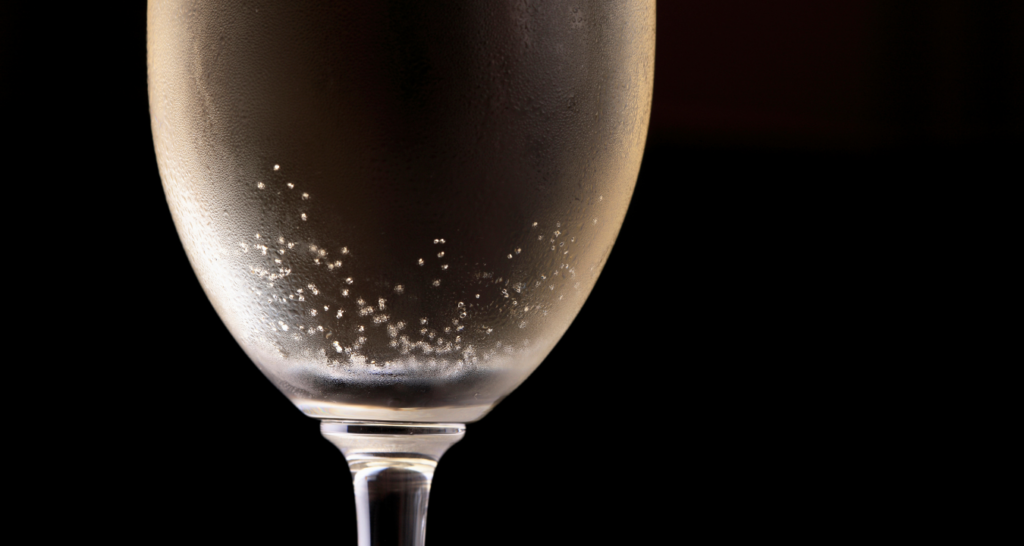
In its most classic expression, Cava often shows a profile built around freshness, tension and clean fruit, with notes that may move toward apple, pear and citrus, sometimes with floral or slightly herbal touches depending on the blend. The mousse may be more or less fine, but the overall aim is often a balance between liveliness, clarity and drinkability. This is the register that dominates in the youngest, most direct styles, often made for more immediate drinking.
The grape varieties play an important role here. Macabeo often contributes softer, more accessible fruit, Xarel-lo brings more structure, acidity and depth, while Parellada tends toward finer, lighter profiles.
Lees ageing then changes a great deal. The longer it lasts, the more the wine moves away from a simple fruit-driven profile and toward more complex notes: toast, brioche, hazelnut, dried fruits, and sometimes a creamier or more vinous feel. This ageing also brings more texture, more depth and often a better-integrated mousse. It is one of the major turning points between a young Cava and a more ambitious one.
Dosage also plays an important role in the final perception. A drier Cava will give a stronger impression of tension, clarity and sometimes greater strictness. A slightly more generous dosage can bring more roundness, smooth out acidity a little and make the wine more accessible in certain contexts. Dosage therefore does not only alter the perception of sweetness: it also affects the overall balance and the way the wine works at the table.
That is why it is useful to distinguish between two broad style families. On one side, there is young, taut, fruit-driven Cava, more direct, often centred on freshness, crunchy fruit and a simpler reading of sparkling wine. On the other, there is more complex, more vinous, more autolytic Cava, where lees ageing plays a larger role, texture becomes more important, and the wine can become more gastronomic. In this second register, Cava is no longer just a wine for celebrations or aperitif: it becomes a true table wine.
7. How to choose a good Cava… and what to drink it with
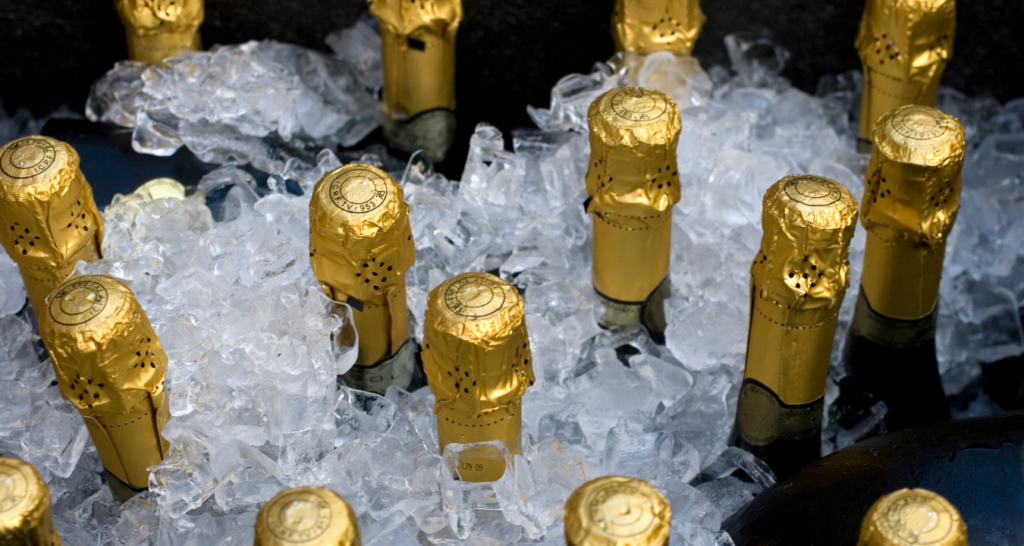
Choosing a good Cava is not simply about spotting a Spanish sparkling bottle on a shelf. To buy more accurately, you first need to know what you are looking for: a fresh and direct style, a more complex wine, a sparkling aperitif or a genuine table wine. The right Cava is therefore not the same depending on the occasion, the level of complexity expected and the gastronomic use you want to make of it.
The first useful reference point is the style you are looking for. If you want a lively, taut, fruity and immediate Cava, it is better to look toward younger categories, often simpler in expression, with a more direct reading of freshness and fruit. If, on the other hand, you are looking for a wine with more depth, more texture and a more marked lees influence, then it makes more sense to look at higher categories such as Reserva or Gran Reserva, which offer greater complexity and more presence.
The occasion also matters a great deal. For an aperitif or a festive moment, a young, precise and easy-to-read Cava can be entirely appropriate. For a more structured meal, however, a more vinous, more gastronomic, longer-finishing style will often be more interesting. In other words, a good Cava is not only the one you like in itself, but the one that fits the right moment of consumption.
Finally, the ageing category is a practical way to buy more intelligently. A Cava de Guarda will often work very well if you are looking for a sparkling wine that is fresh, simple and accessible. A Guarda Superior, Reserva or Gran Reserva will suit you better if you are looking for more substance, more complexity and a stronger ability to accompany food. In that sense, the hierarchy of Cava is useful: it is not only informative, it is also practical.
A few simple markers can therefore help at the moment of purchase:
- for a lively and direct style: favour the youngest categories
- for more complexity: look for longer ageing
- for gastronomic use: aim for more structured Cavas
- for a very dry profile: pay attention to the dosage
- for a more precise purchase: do not choose only on price or image, but on the style indicated by the category
This reading becomes even more useful when thinking about Cava at the table. One of its major strengths is its gastronomic versatility. Thanks to its freshness, its mousse and its structure — more or less marked depending on style — it works with a wide range of dishes.
As an aperitif, it remains a safe choice, especially in its freshest and most precise expressions. It easily accompanies salty bites, olives, toasted almonds or simple small preparations.
With tapas, Cava works especially well. Their diversity of textures and flavours often finds a good echo in a sparkling wine that can refresh the palate while keeping enough character not to disappear.
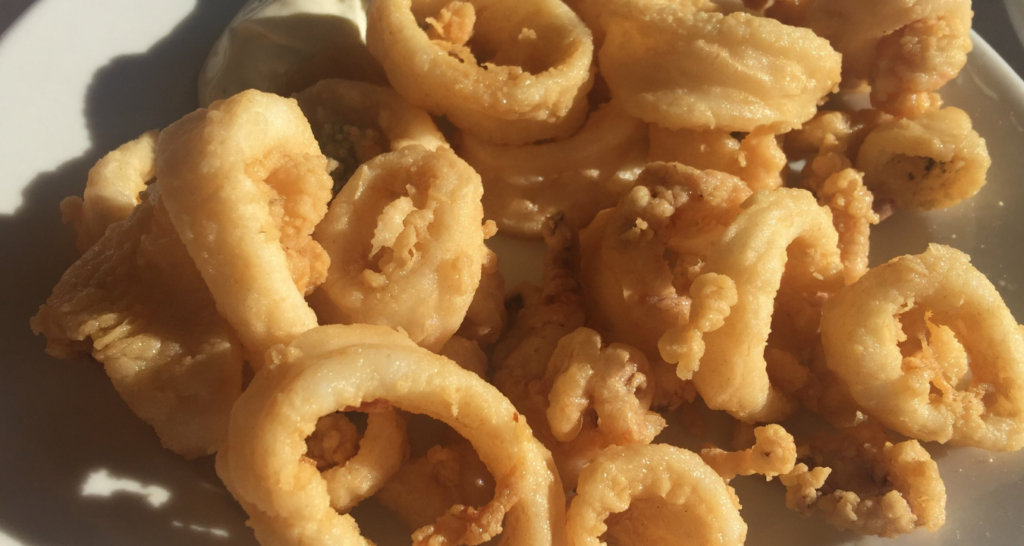
Fried foods are also an excellent pairing ground. The bubbles and acidity of Cava help lighten the sensation of fat and restore relief to the palate, which explains why it works so well with delicate fried foods, savoury fritters or certain crisp tapas.
Seafood, and more broadly certain marine products, are also natural partners. The tautest and most precise styles of Cava go particularly well with oysters, shellfish, prawns or simple seafood preparations.
With Mediterranean cuisine, Cava also finds its place very easily. Olive oil, grilled vegetables, herbs, saline preparations or fish-based dishes can all work beautifully with a sparkling wine that keeps its freshness without lacking presence.
Dishes with a salty or umami-driven register often work very well too, especially when the Cava has gained some complexity through lees ageing. That is where it becomes especially interesting gastronomically: it no longer simply opens the meal, it can truly accompany it.
You can even move toward a few more surprising pairings, especially with cuisines where the contrast between texture, salt and freshness plays an important role. A well-chosen Cava can therefore prove more versatile than many people imagine.
8. Our favourite Cava producers at Weeno
At Weeno, we are especially drawn to producers who allow Cava to be read with more precision, more depth and more personality. That is the case with Recaredo and Gramona, two major houses working in biodynamics, which show just how much intensity, complexity and ambition Cava can gain when it is approached as a great terroir wine. In a slightly different register, Raventós i Blanc also holds an important place in our selection, with wines that remind us how the identity of Penedès can produce sparkling wines of real finesse.
We also have a great deal of appreciation for Alta Alella and Llopart, two producers committed to organic farming, whose wines are highly readable, precise and often very elegant. They are especially interesting for understanding that Cava does not come in just one style: depending on grape choices, ageing and production philosophy, the wines can move toward profiles that are more taut, more saline, creamier or more gastronomic.
In other words, if you want to discover what Cava has at its most convincing, these are exactly the kinds of producers worth looking at closely. Each of them, in its own way, shows that beyond the image of a simple Spanish sparkling wine, Cava can be a genuine subject of tasting.
9. What Cava helps us understand about sparkling wine… and why learning to read it really changes tasting
Cava is an excellent learning ground for understanding sparkling wine. Precisely because it is so often underestimated, it forces us to look beyond the quickest reflexes: price, reputation, image, or simple comparison with more famous categories. And that is exactly where the subject becomes highly educational.
At heart, Cava teaches us above all to develop a real reading of style beyond image. It pushes us to look at what the wine is actually saying: its production method, its grape varieties, its ageing, its dosage, its place at the table. That is precisely why it genuinely changes tasting. You stop judging a sparkling wine based only on reputation or comparison with another category. You begin to read it on its own terms.
And that is where Cava becomes particularly interesting within a broader educational framework. Because it forces us to move beyond shortcuts, it becomes an excellent way to deepen our understanding of sparkling wine styles. It teaches us to taste with more method, to connect production factors to what ends up in the glass, and to structure our tasting more clearly.
From that perspective, structured courses make complete sense. They help organise key reference points, connect technical elements to tasting sensations, and teach you how to read styles with greater precision. That is precisely what an approach such as the WSET provides: a clear framework for understanding sparkling wines beyond image or reputation.
Cava: more than an alternative, a category in its own right
Cava clearly deserves better than the reductive image that still sometimes clings to it. It is not just an accessible Spanish sparkling wine or a simple alternative to more famous categories. It is a serious, diverse and technical category, with its own history, grape varieties, production method, ageing levels and real tasting logic.
That is precisely what makes it so interesting from an educational perspective. Cava is not only a wine to drink: it is also an excellent support for learning how to read styles, connect production choices to the result in the glass, and move beyond quick judgments based on image or reputation.
If you would like to go further, the easiest next step is to discover our courses, learn how to read styles with more method, and deepen your understanding of wine within a more structured tasting framework.