

The return of CPF funding for the WSET Level 3 in Wines marks an important milestone for anyone looking to deepen their understanding of wine. Long perceived as a demanding qualification mainly aimed at established professionals, this internationally recognised diploma is now becoming more accessible again thanks to professional training funding schemes.
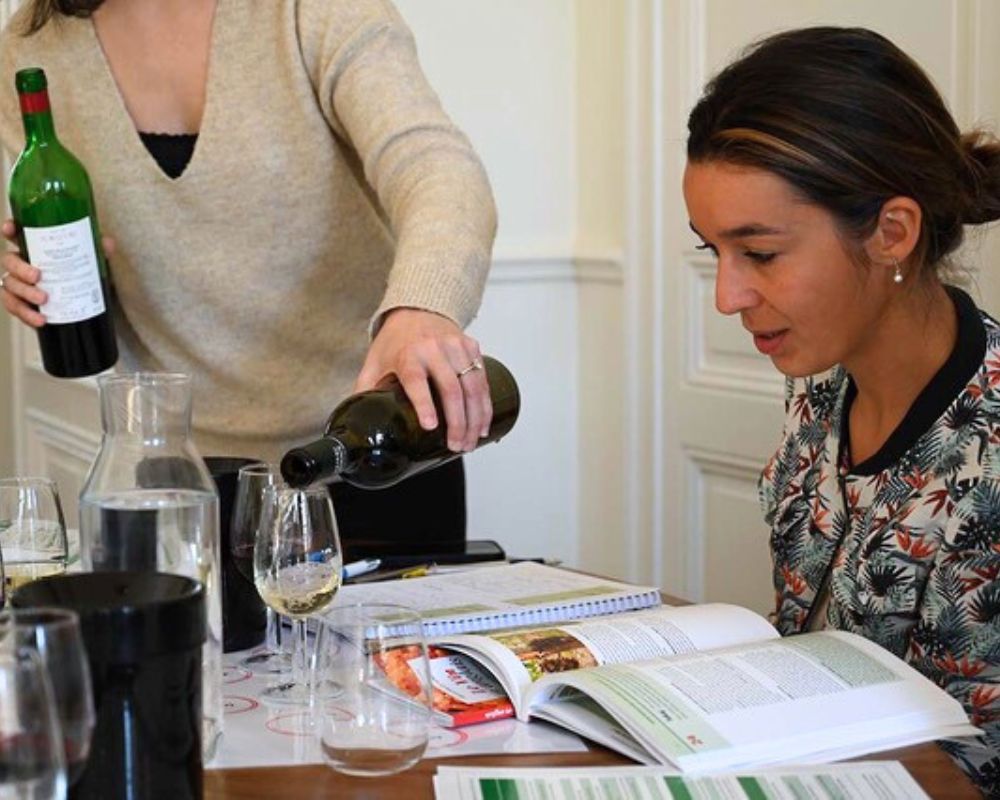
At Weeno, this programme is delivered within a learning environment specifically designed to optimise both knowledge acquisition and the overall experience. Sessions take place in small groups to encourage interaction and discussion. Tastings are built around a carefully curated selection of around 75 wines, many sourced from organic or biodynamic producers. Courses are led by certified WSET educators with extensive experience, consistently praised by participants (5/5 reviews on Google). Training is available in person in central Paris (9th arrondissement) and Marseille (7th arrondissement), with continuous support from enrolment through to diploma completion to ensure a structured and personalised learning journey.
This qualification occupies a strategic position in wine education. It is no longer simply about acquiring basic knowledge or recognising styles; it is about developing genuine expertise: understanding the factors that influence wine production, analysing structure with precision, and mastering a professional language recognised internationally. For many, this level becomes a real lever for employability, credibility and career progression across the wine, hospitality, retail and consultancy sectors.
The renewed eligibility for CPF funding significantly changes the landscape. A programme known for its rigour and high cultural and professional value becomes financially more accessible. While the personal investment in time, commitment and study remains substantial, the financial barrier can be greatly reduced, opening the door to a broader audience: committed enthusiasts, career changers and professionals seeking to structure and strengthen their expertise.
Beyond being just another qualification, WSET Level 3 fits into a broader learning journey — one that combines technical skills development, a strong and lasting wine culture, and tangible professional experience. It goes beyond knowledge acquisition to become a genuine tool for both personal growth and professional advancement.
1. WSET Level 3 in Wines: a pivotal step in wine education
This programme represents a key milestone in any structured wine education journey. Internationally recognised by industry professionals, the WSET Level 3 in Wines qualification has become a benchmark standard for developing solid, structured expertise that can be directly applied in professional contexts. Whether you already work in the wine sector or are considering a career change, this certification provides a globally recognised foundation of knowledge and skills.
The course is built on a comprehensive analytical approach. It covers structured wine tasting, but also the fundamental factors influencing wine style: viticulture, climate, grape varieties, winemaking techniques, maturation and regional specificities. The objective is not simply to identify a wine or appreciate its aromas, but to understand why it displays a particular profile, structure or balance.
This methodology gradually helps learners develop a shared professional language. Being able to describe a wine accurately, justify a selection, explain a style or analyse a wine list becomes a transferable skill, useful in hospitality, wine retail, education, consultancy or distribution.
One of the most significant contributions of WSET Level 3 lies precisely in this ability to establish cause-and-effect relationships. Understanding how climate impacts grape ripeness, how vineyard practices influence structure, or how winemaking decisions shape style allows learners to move well beyond intuitive tasting toward informed analysis.
Beyond technical knowledge, the WSET qualification is also a strong asset in terms of professional attractiveness. Listing it on a CV sends a clear signal: it reflects structured training, international recognition and a demanding academic standard. Many professionals report that achieving a WSET level played a decisive role in recruitment or career progression within the wine and spirits sector. For employers, it demonstrates not only knowledge, but also commitment, analytical ability and professional rigour — qualities highly valued across the industry.
The pedagogical objective is straightforward: to learn to understand wine, not just taste it.

2. Programme structure and course format: what to expect
The programme is built on a balance between theory, tasting practice and independent study. This combination is essential: it anchors knowledge in practical experience and helps develop a global understanding of wine styles rather than simple memorisation.
The training typically represents around 100 hours of learning, combining guided classroom sessions with individual study time. Personal commitment is a key part of the process: reading, revision, additional tasting practice and gradually mastering technical vocabulary are all integral to success.
Another cornerstone of the programme is tasting.
Approximately 75 wines representing major wine regions worldwide are studied throughout the course. This diversity allows learners to clearly see how climate, grape varieties, viticultural practices and winemaking techniques influence a wine’s final style. The objective is always to connect theory with sensory experience.
Sessions are generally delivered in small groups of around 14 participants, a format that encourages interaction, discussion and comparison of tasting perceptions. This collective dimension plays an important role in learning: exchanging viewpoints, refining vocabulary and understanding different analytical approaches enrich overall progression.
Ultimately, the pedagogical approach combines:
- structured analytical tasting,
- theoretical understanding of factors influencing wine,
- and a global perspective on international wine styles.
This structure requires consistent personal preparation. Regular study is essential to assimilate concepts, improve tasting accuracy and approach the final examination with confidence.
3. A programme designed for an international professional context
WSET Level 3 in Wines is firmly rooted in an international professional environment. The wine industry is global by nature: trade, tourism, export activities and professional communication frequently take place in English. For this reason, some sessions are offered in French–English bilingual formats, allowing participants to develop both technical expertise and professional language confidence simultaneously.
This international dimension goes far beyond simple translation. It involves acquiring precise professional vocabulary used worldwide by sommeliers, importers, retailers, educators and distribution professionals. Being able to describe a wine accurately in English, interpret international technical sheets or participate confidently in professional tastings becomes a practical and valuable skill.
The programme also develops oral and written communication skills around tasting. Structuring an analysis, justifying a choice, explaining a style or presenting a wine to different audiences are all competencies reinforced during the course. This ability to clearly articulate sensory perceptions is highly valued in wine careers, where education, advising and communication play a central role.
We also offer fully English-language sessions as well as bilingual French–English formats. This approach helps participants master international wine vocabulary, gain confidence in guided tastings and strengthen employability in a globalised professional context. It represents a significant advantage for those already working internationally or planning to do so.
In this context, the training can serve as a powerful lever to:
- consider a career transition into the wine industry,
- grow within an international professional environment,
- or strengthen credibility with international clients and partners.
Beyond technical training alone, this global perspective clearly enhances employability, mobility and professional credibility in a sector where fluency in the language of wine is a decisive asset.
4. CPF Funding: why this is a strategic opportunity
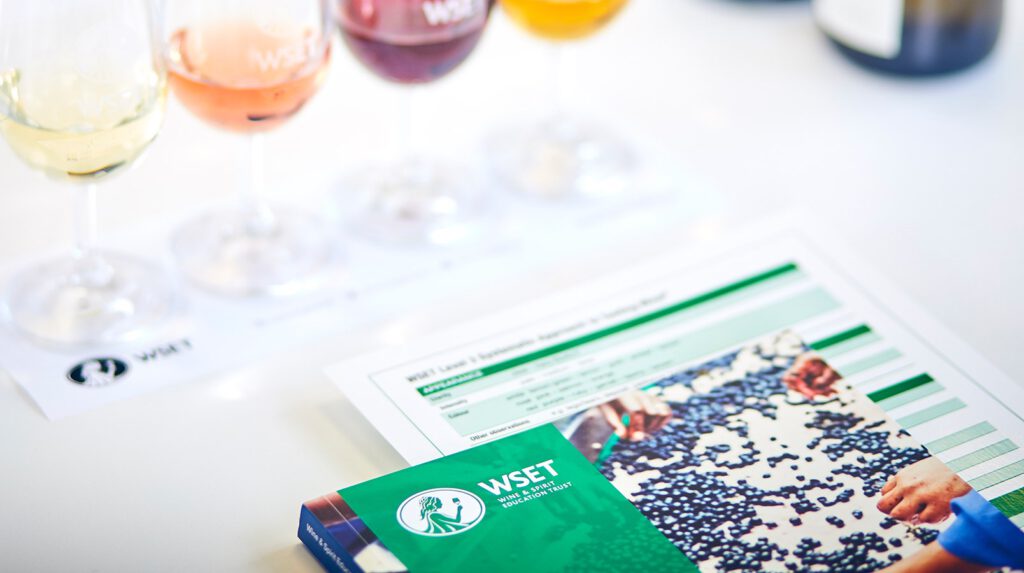
The return of WSET Level 3 in Wines to CPF funding eligibility represents a significant opportunity for anyone wishing to seriously develop their wine expertise without financial constraints becoming a barrier. High-level training programmes are often perceived as inaccessible, even though they fully fall within the scope of professional continuing education.
This programme can now be funded through the French Personal Training Account (CPF) and may also, depending on individual situations, be supported by other funding mechanisms such as employer sponsorship, career transition programmes or professional development schemes. This fundamentally changes the enrollment logic: while the personal commitment in terms of time and effort remains substantial, the financial impact for the learner can be significantly reduced.
This financial accessibility makes the decision particularly strategic. The balance between effort invested and benefits gained is among the most attractive in the sector:
- acquisition of solid, internationally recognised technical skills,
- development of a professional international wine vocabulary,
- long-term structuring of wine knowledge and expertise,
- expansion of professional networks,
- increased credibility with employers, partners and clients.
Few programmes offer such a strong return on investment — both professionally and personally — while remaining accessible through regulated funding frameworks.
The positioning is clear: a premium, demanding and internationally recognised programme made financially accessible, aligned with a thoughtful and sustainable professional development strategy.
5. How to enroll in WSET Level 3 in Wines using CPF
Enrolling in the programme through CPF follows a straightforward process:
- Check your CPF balance by logging into your account: https://www.moncompteformation.gouv.fr
- Log in using your La Poste digital identity to secure your application.
- Search for “WSET Level 3 Wines” in Paris or Marseille on the CPF platform.
- Submit your preferred session dates → requests are typically validated within 24 hours.
- Approve your CPF file (a mandatory remaining cost of around €100 may apply) → you are officially enrolled.
- Preparing for the programme: once registered, course materials are generally sent ahead of the training. Early preparation is strongly recommended (around 60 hours minimum): starting the manual, familiarising yourself with technical vocabulary and organising your study schedule significantly improves knowledge integration.
Advance planning is also advised. Sessions often fill quickly, and CPF administrative timelines require anticipation to ensure a smooth and stress-free start to the training programme.

6. Who is WSET Level 3 in Wines for… and what it really changes
This programme is designed for a wide range of profiles:
- wine professionals: wine merchants, sommeliers, sales representatives, producers, wine tourism professionals, restaurateurs,
- individuals planning a career transition into the wine sector,
- committed wine enthusiasts seeking structured expertise.
It is worth noting that WSET Levels 1 and 2 are not mandatory prerequisites for Level 3, although they are strongly recommended to ensure a solid foundation before entering this advanced programme.
This diversity is one of the programme’s greatest strengths. Exchanges between participants with different backgrounds encourage the sharing of experiences, the comparison of perspectives and the development of lasting professional relationships. As a result, the programme becomes not only a learning environment but also a space for networking and opportunity building.
Beyond technical knowledge, the impact is often tangible and long-lasting. The training develops an analytical reading of wine, enabling participants to understand styles with precision and explain them clearly. It also strengthens professional credibility, particularly in advisory, sales, education or wine communication contexts.
Many participants also report a significant expansion of their professional network: new collaborations, career opportunities or simply access to a community of professionals and enthusiasts who share a common language around wine.
Finally, one of the most significant benefits of the programme is the lasting structuring of knowledge. It does not merely transmit information; it provides a method, a framework for analysis and a way of thinking that continues to serve participants long after the course has ended.
In this sense, WSET Level 3 is not just a certification — it is a genuine lever for long-term personal and professional development.

An opportunity worth seizing at the right time
The return of WSET Level 3 in Wines funding through the CPF (Personal Training Account) creates a particularly interesting window of opportunity. In a wine sector that continues to evolve rapidly — where technical expertise, analytical ability and professional credibility are increasingly valued — undertaking training today can become a genuine strategic lever.
This programme brings together several advantages that are rarely combined:
- an internationally recognised certification,
- improved accessibility thanks to professional training funding schemes,
- and concrete benefits in terms of skills development, professional network expansion and career progression.
For many learners, it represents both an investment in expertise and a structured way to deepen their long-term understanding of wine.
Without pressure or artificial urgency, it may simply be the right moment to gather information, clarify your professional direction or consider strengthening your skills.
You can explore the details of the WSET Level 3 in Wines programme in Marseille or Paris, check your CPF funding eligibility, or connect with the Weeno team to see whether this training aligns with your goals.
Please note that all our programmes are CPF-eligible when taken within a professional English training framework (CLOE or LTE certification).
Sometimes, a simple enquiry is all it takes to initiate meaningful professional growth.