

The world of wine and spirits continues to fascinate. Behind every bottle lies a combination of terroir, craftsmanship, human stories and a highly dynamic global economy. What many people still underestimate, however, is that this passion can translate into genuine professional career opportunities.
Long perceived as an industry reserved for insiders or family inheritances, the wine and spirits sector has become significantly more accessible. It now offers a wide range of career paths, from production and trade to communication, hospitality, education, tourism, marketing and consulting.
Entering this field requires more than an interest in tasting. Technical understanding, international awareness, professional networking and analytical skills are essential for long-term development. These are precisely the competencies developed through WSET Level 1 to 3 training programmes, sometimes combined with professional English certifications such as CLOE or LTE, and in many cases eligible for professional training funding schemes.
This article provides a clear overview of career opportunities in wine and spirits, the skills currently in demand, and practical pathways for building a sustainable career in this culturally rich and economically significant industry.
1. A broad and often misunderstood industry
When people think about careers in wine, they usually picture winemakers or sommeliers. In reality, the sector is far broader and more diverse.
Key areas include:
Production
- Viticulturists, distillers and beverage producers
- Oenologists, cellar masters and blending specialists
- Brewers and sake producers
- Agricultural technicians and quality specialists
Distribution and trade
- Importers and exporters
- Buyers, merchants and sales representatives
- Retail specialists and wine shop managers
- Market consultants and industry experts
- Wine tourism guides
Hospitality and service
- Sommeliers
- Bartenders and mixologists
- Beverage managers in hospitality and restaurants
Communication and marketing
- Brand ambassadors
- Specialised journalists and writers
- Content creators and community managers
- Marketing, PR and events professionals
This diversity explains why the industry attracts a wide range of profiles — from scientists and agricultural specialists to marketers, communicators and gastronomy enthusiasts.
Ultimately, the wine and spirits sector spans the entire value chain: production, distribution, sales, communication, hospitality and education. Understanding this breadth is often the first step toward identifying where your own skills, interests and ambitions can fit within this evolving global industry.

2. A deeply international industry
Wine and spirits are inherently global products.
International trade, wine tourism, export markets and professional trade fairs mean that exchanges regularly go far beyond national borders. Professional English is often essential, as is an understanding of different drinking cultures and consumer behaviours.
This global dimension opens a wide range of professional opportunities:
- working abroad or with international markets
- collaborating with producers, importers and distributors worldwide
- building a career within international beverage groups
For many professionals, this international exposure is one of the industry’s strongest attractions, combining cultural interest with professional mobility.
To support this reality, our WSET training programmes offer the option to include professional English certifications such as CLOE or LTE, helping participants strengthen both technical expertise and industry-specific language skills.
3. Key skills for building a successful career in wine and spirits
Contrary to popular belief, simply enjoying wine is not enough to succeed professionally in the sector.
Employers typically look for a combination of technical, analytical and interpersonal competencies.
Technical expertise
Understanding styles, production methods, terroirs and market dynamics is essential. This knowledge allows professionals to interpret products accurately and position them effectively.
Analytical skills
Being able to explain a wine or spirit clearly, justify recommendations and guide consumers or clients is a core professional capability.
Interpersonal skills
Customer service, pedagogy and communication are central across most roles, from hospitality to sales, education and marketing.
Adaptability
The industry evolves rapidly, driven by emerging markets, changing consumer trends, sustainability challenges and technical innovation. Flexibility and continuous learning are therefore critical.
Beyond technical knowledge, passion, openness, cultural awareness and the ability to work with diverse international stakeholders remain key qualities for building a sustainable career in the wine and spirits world.
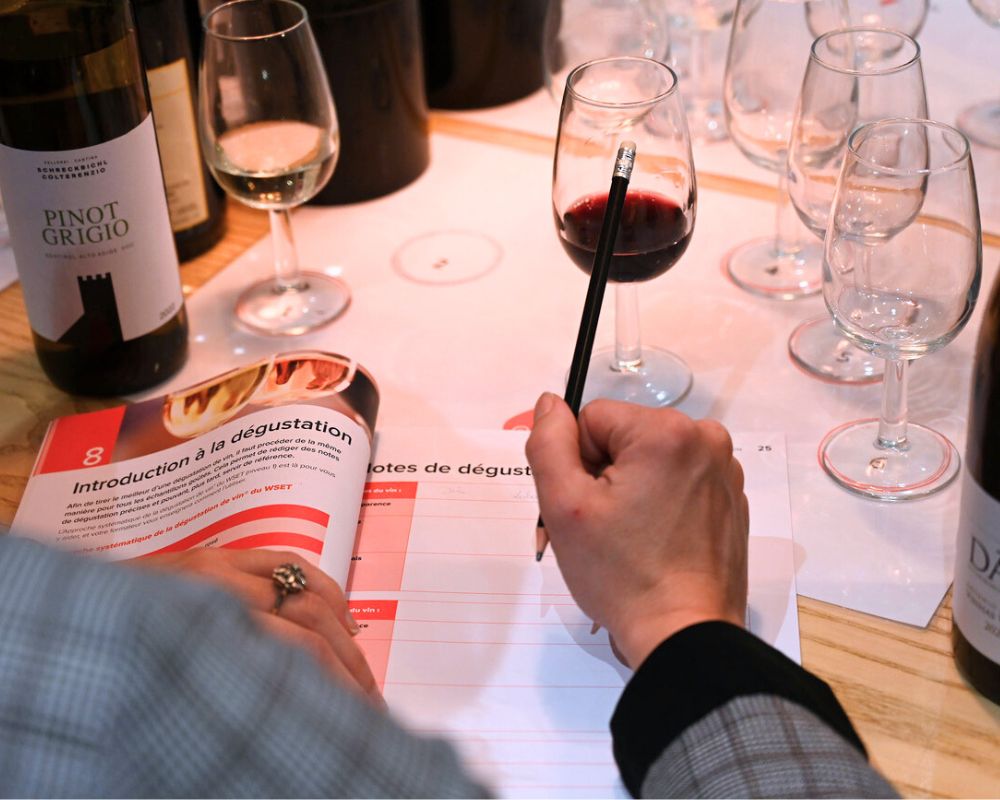
4. Training and credibility: often a strategic step
Serious professional training is one of the most effective ways to enter or progress within the wine and spirits industry.
Internationally recognised certifications, such as those offered by the WSET, can help professionals:
- acquire a shared professional language
- structure their understanding of the sector
- strengthen credibility with employers, clients or partners
- build and expand a professional network
Training often acts as an accelerator. While it does not guarantee a job, it creates favourable conditions for career development by combining technical knowledge, analytical skills and industry recognition.
5. Career change: an increasingly common pathway
Many professionals in wine and spirits come from entirely different backgrounds, including:
- marketing and sales
- hospitality and tourism
- finance, communication or entrepreneurship
- passionate enthusiasts seeking to professionalise their interest
This sector attracts people because it combines:
- strong cultural depth
- human connection and gastronomy
- international opportunities
- a wide diversity of career paths
Career trajectories are rarely linear. Many professionals start in entry-level roles before gradually progressing to positions with greater responsibility. Others first structure their knowledge through training before entering the industry with stronger credibility.
In this context, short and certifying programmes such as WSET courses play a particularly strategic role. Within roughly three months, it is possible to complete Levels 1 to 3 in wines or spirits — a solid, internationally recognised foundation that is immediately understandable to recruiters.
This timeframe offers several advantages:
- the time commitment remains compatible with ongoing professional activity
- funding can be accessible through professional training schemes
- skill development is rapid, structured and directly applicable
Unlike longer academic programmes, these certifications allow participants to quickly acquire a professional vocabulary, an analytical understanding of styles, and sufficient technical credibility to enter the job market with confidence.
Professionals consistently recommend gaining hands-on experience, developing a network and continuing education throughout one’s career. Today, recognised certifications make it possible to accelerate this process, providing a structured, demanding yet accessible framework for those considering a career transition into the wine and spirits industry.

6. A fascinating… yet demanding industry
Working in the wine and spirits sector also involves realities that are sometimes underestimated:
- irregular working hours, particularly in hospitality and events
- strong competition in certain roles
- the need for continuous professional development
- markets subject to economic fluctuations
- potential exposure to alcohol-related risks requiring responsible professional practices
For many professionals, however, the cultural, human and sensory richness of the industry largely offsets these constraints. The opportunity to work at the crossroads of gastronomy, culture, travel and commerce remains a powerful motivator.
Turning passion into a career: a structured professional path
Wine and spirits represent far more than a tasting hobby.
They form a complete, international and constantly evolving industry where agriculture, gastronomy, business, communication and culture intersect.
Building a career in this field typically requires:
- curiosity and sustained commitment
- structured training and technical understanding
- a strong professional network
- cultural openness and adaptability
For those willing to invest in these elements, the opportunities are real and diverse. Whether the goal is career change, professional development or simply structuring an existing passion, entering this sector can open unexpected pathways — often far beyond the initial interest in tasting.
This is precisely the perspective behind our WSET Level 1 to 3 training programmes, delivered in Marseille, Paris and online. They can also be complemented by professional English certifications through CLOE or LTE, and may be eligible for professional training funding such as CPF depending on individual situations.