Taking a WSET course in Paris: much more than choosing a date
When looking for a WSET course in Paris, the first instinct is often to check the next available dates. But organising your WSET journey properly involves much more than simply selecting a course from a calendar.
First, you need to decide which category — wine, spirits, Japanese sake or beer — and which level genuinely match your goals. You also need to consider the course format, preparation time, tastings, the exam and, if you are travelling from elsewhere in France or from abroad, the practical organisation of your stay.
Paris is a particularly convenient place to take a WSET course in person, with access to specialist training and a wide range of products to taste.
At Weeno, upcoming courses place particular emphasis on two less familiar WSET categories: beer and sake. Both remain less widely understood than wine and spirits, yet they offer valuable opportunities for professionals and enthusiasts looking to develop more distinctive expertise.
In this article, we explain how to organise your WSET course in Paris and get the most out of the experience.
1. Define your objective before choosing your WSET course
The first instinct is often to look directly at the highest available level. However, choosing a WSET course simply because the level sounds more prestigious is rarely the best strategy.
The right pathway depends above all on your starting point and what you want to be able to do at the end of the course.
For an enthusiast, the goal may be to structure knowledge already acquired informally, understand styles more clearly and gain confidence when tasting.
For professionals working in restaurants, bars, sommellerie, distribution or sales, the priority may be different: giving better advice to customers, presenting a selection more convincingly, understanding the factors that influence style and quality, or strengthening professional credibility.
For someone changing careers or looking to strengthen their CV, a WSET qualification can help to formalise knowledge, develop precise technical vocabulary and build solid foundations before progressing to a more advanced level.
The real question is therefore not simply “Which level can I take?” but rather “What do I want to be able to do after this course?”
Understanding the fundamentals, advising customers accurately, analysing a product professionally or developing deeper expertise in one category all require different levels of commitment.
Once that objective is clear, it becomes much easier to choose the right category — wine, beer, sake or spirits — and the most appropriate WSET level.

2. Which WSET level should you choose in Paris?
Once you have defined your objective, the next step is choosing the right level. Again, the highest level is not necessarily the best place to start.
WSET Level 1: build strong foundations
WSET Level 1 is designed as a structured introduction. It helps you develop essential vocabulary, understand the main style categories, learn the key factors involved in production and build the foundations of systematic tasting.
It usually takes place over one day, often on a Sunday from 10am to 4pm.
It is a good choice if you are a beginner, want to organise knowledge acquired informally or simply want to describe a product with greater precision.
WSET Level 2: move from discovery to analysis
WSET Level 2 goes further into raw materials, production techniques and the factors that influence style and quality.
Depending on the category, it generally takes place over two to three days, often from Monday to Wednesday between 9 am and 4 pm.
At this stage, the aim is no longer simply to recognise a style. You begin to understand why it has that particular profile, which technical choices explain it and how those decisions appear in the glass.
WSET Level 3: develop genuine expertise
WSET Level 3 requires more independent study and a more advanced analytical approach. The aim is to connect production, style, quality and tasting with greater precision.
Depending on the category, the course takes place over several days and may be divided across consecutive weeks.
This is where an important principle becomes clear: progressing through WSET is not simply about memorising longer lists.
The higher the level, the more you learn to think in terms of cause and effect.
Understanding why a choice involving raw materials, fermentation, maturation or service changes the final style becomes more important than simply memorising definitions.
3. Why take a WSET beer course in Paris?
Beer is often discussed using a far less precise vocabulary than wine.
A beer may simply be described as “bitter”, “fruity” or “strong”, even though those sensations can result from a wide range of technical decisions.
Understanding beer means learning to connect raw materials, fermentation, style and quality.
Malt contributes to colour, body and flavour. Hops influence bitterness and aromatic expression. Water affects balance, while yeast plays a direct role in the final profile.
Then there are the differences between ales and lagers, the timing of hop additions, fermentation management, service and freshness.
This is precisely what a WSET Beer course helps to structure.
At Level 1, the aim is to build a clear foundation covering the main ingredients, key production stages, essential beer styles, service and the WSET Systematic Approach to Tasting.
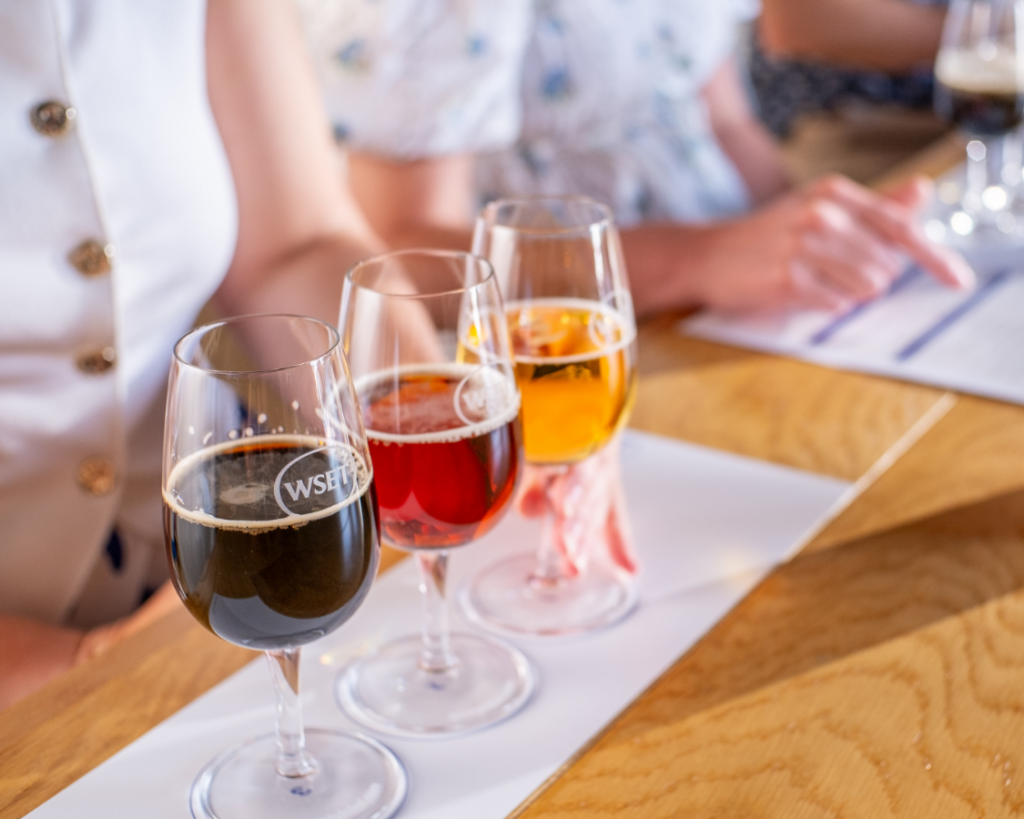
At Weeno, the in-person course in Paris includes the tasting of 16 beers, with groups limited to 10 participants, allowing students to compare styles and practise sensory analysis in good conditions.
This approach is particularly useful for bartenders, hospitality professionals, specialist retailers, drinks sales professionals and beginner brewers, as well as enthusiasts who want to move beyond a simple “I like it / I don’t like it” approach.
Learning about beer ultimately means developing the vocabulary to describe what you taste — and understanding why the beer was made that way.

4. Why take a Japanese sake course in Paris?
Sake is still often reduced to a fairly simplistic image: a Japanese drink encountered in restaurants, sometimes served warm, with styles that can seem difficult to understand.
Worse still, in France sake is sometimes confused with baijiu, a Chinese spirit that has historically been referred to incorrectly as “saké” in some restaurants.
In reality, sake production involves a series of highly precise technical decisions.
Rice variety, polishing ratio, koji, fermentation, yeast, water, fermentation temperature, filtration, dilution and serving temperature can all influence aroma, texture and final quality.
A WSET course helps organise these concepts into a clear framework.
WSET Level 1 in Sake: build the foundations
WSET Level 1 in Sake introduces the main stages of production, principal styles and the fundamentals of service and tasting.
At Weeno, the course includes the tasting of 12 sakes, allowing students to compare the profiles covered in the programme.
WSET Level 2 in Sake: explore production and styles in greater depth
WSET Level 2 goes further into production methods and the factors influencing style and quality.
The course includes 30 sakes, providing a much broader range of expressions to analyse.
WSET Level 3 in Sake: develop advanced expertise
WSET Level 3 in Sake is designed for candidates seeking a much deeper level of analysis, connecting production methods with style, quality and tasting.
At Weeno, the course includes 45 sakes and is now part of the training programmes available in Paris.
Several upcoming sessions allow students to build a progressive pathway:
8 November: WSET Level 1 Sake
9–10 November: WSET Level 2 Sake
8–10 November: WSET Levels 1 + 2 package
20–23 April 2027: WSET Level 3 Sake
For professionals and enthusiasts alike, sake offers an opportunity to develop expertise that remains relatively distinctive within the French drinks market.
5. How should you prepare for your WSET course in Paris?
Preparing for a WSET course starts before the first day in the classroom.
The more advanced the level, the more important it becomes to plan your independent study so that you can make the most of tastings and discussions with your educator.
Before the course
Start by checking any entry requirements and the exam format.
Once enrolled, take time to review your study materials as soon as you receive them.
The aim is not necessarily to know everything before the course begins, but to arrive having already looked through the programme, established a few reference points and reserved time for revision.
This becomes particularly important at Levels 2 and 3. Arriving without any preparation can make an already intensive learning experience considerably more demanding.
During the course
One of the main advantages of classroom training is the opportunity to turn theory into practical analysis.
Take notes, but above all compare the products you taste systematically.
What changes between two styles? Which production decision explains that difference? How can you recognise it in the glass?
Try to use WSET terminology from your first tastings. The more often you apply a structured method, the more natural it becomes.
Small groups are particularly valuable here. Weeno’s Paris courses are taught in reduced class sizes, including a maximum of 10 participants on the listed sake courses, allowing more time for questions, discussion and individual feedback.
After the course
Training does not end with the final tasting.
Go back over the subjects you found most difficult, revisit your tasting notes and identify any cause-and-effect relationships that still feel unclear.
Finally, treat the exam as a separate stage of preparation.
Understanding the content, knowing how to apply it and being able to express it clearly are three different skills — and all three matter in a WSET pathway.

6. How to organise your trip to Paris without adding unnecessary stress
If you are travelling from another region to take a WSET course in Paris, practical organisation deserves as much attention as your revision schedule.
If your course begins in the morning, arriving the day before is often the best option. It avoids adding an early journey, possible delays and travel fatigue to an already intensive day.
For multi-day courses, it may also be wise to avoid travelling home immediately after the final session, particularly if you still need to revise or sit an exam.
Evenings matter too.
A WSET course requires concentration, tasting, comparison and a considerable amount of information to process. Keeping evenings relatively quiet gives you time to review your notes, revisit difficult topics and recover properly.
And while it may be tempting to make the most of being in Paris, avoid turning your stay into a sightseeing marathon if the course is your priority.
A few hours exploring the city can be enjoyable. An overloaded schedule may simply reduce your concentration the following morning.
Weeno’s Paris courses take place in the 9th arrondissement, a central and easily accessible area.
You can reach the venue via Metro line 2: Anvers or Metro line 7: Poissonnière or Cadet
You can also find the venue easily by searching for Weeno Paris on Google Maps.
The simplest approach is to book your travel and accommodation early, then organise your revision around the actual rhythm of the course.
7. How much time should you allow to succeed in your WSET?
A WSET course is not limited to the hours spent in the classroom.
To organise your time properly, you need to consider four separate elements: classroom teaching, tasting, independent revision and the exam.
At Level 1, the workload is generally more accessible.
From WSET Level 2 onwards, and particularly at Level 3, independent study becomes an essential part of the programme.
Classroom hours help you understand concepts, ask questions and apply theory. Tastings then allow you to connect those concepts with real examples.
But knowledge is often consolidated between sessions:
- rereading the textbook;
- reviewing your notes;
- revisiting cause-and-effect relationships;
- practising the vocabulary expected at your level.
A WSET qualification is therefore not a course that you simply “consume” during classroom hours.
At Levels 2 and 3, regular study sessions before and after the course are generally more effective than one intensive revision session at the last minute.
This approach not only helps you prepare for the exam more methodically, but also makes it more likely that you will retain the knowledge long after receiving your qualification.
If you would like more advice on preparing for WSET exams, we have also created a detailed guide with our practical tips.
👉 Read our guide to succeeding in your WSET exams
8. Why choose Weeno for your WSET course in Paris?
Choosing a training provider is about more than comparing dates.
What matters is the quality of the support, the precision of the teaching and the conditions in which you learn to taste and analyse products.
Weeno is an approved WSET course provider, specialising in wine, spirits, sake and beer.
This range of categories allows students to build coherent learning pathways, whether they are discovering a subject for the first time or progressing towards a more advanced level.
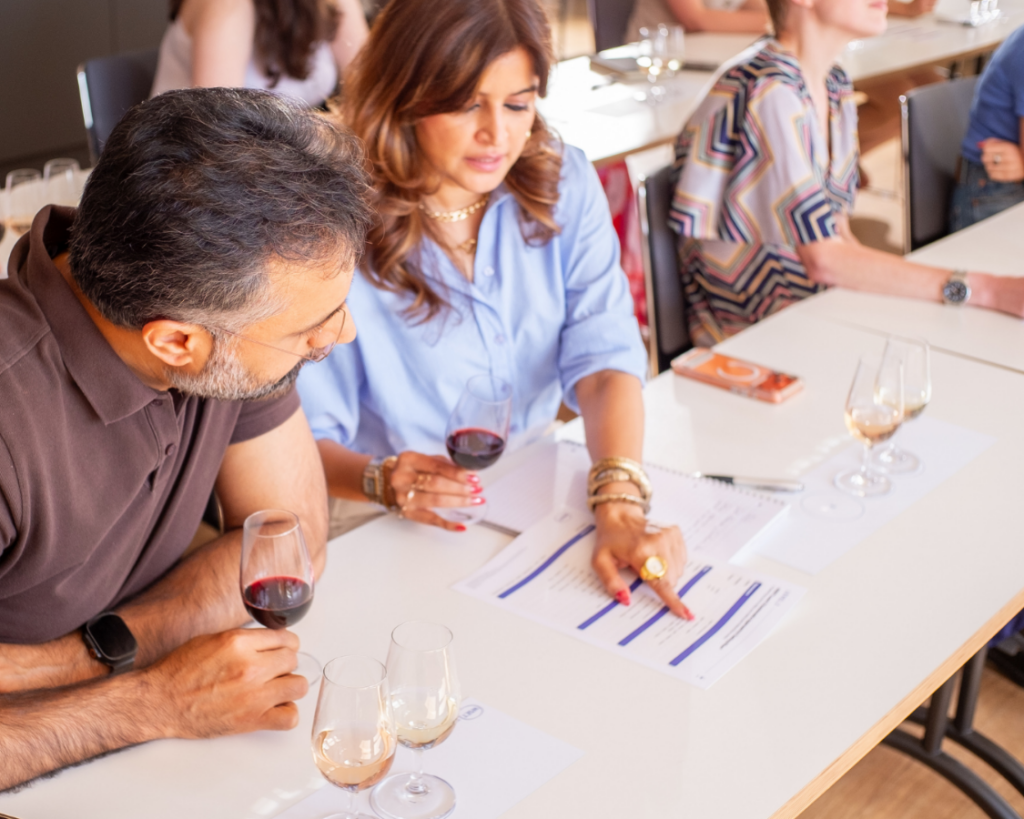
Courses are taught in small groups of no more than 10 participants, creating more space for discussion, questions and individual feedback.
This is particularly valuable during tasting sessions: comparing several products, articulating your impressions and understanding why one style differs from another takes time and guidance.
Courses are led by specialist, experienced educators who have all been teaching for more than three years, using products selected to illustrate the styles, production methods and quality levels covered in the programme.
Particular care also goes into that selection.
Most of the wines tasted are organically or biodynamically produced and come from independent winegrowers, while spirits, Japanese sakes and beers are selected for their quality and authenticity.
Students have recognised this approach with a 5/5 Google review rating.
Depending on the programme, courses may be available in French, English or bilingually, and either in person or online.
The objective remains the same: not simply to prepare students for an exam, but to help them develop a clear, reusable and professional method of analysis.
Book your next WSET course in Paris
Taking a WSET course in Paris is not simply about preparing for an exam or adding another qualification to your CV.
It is an opportunity to dedicate time to structuring your knowledge, training your palate and learning how to explain precisely what is in the glass.
Whether you are a professional, changing careers or simply passionate about drinks, the right pathway is the one that matches both your current level and what you genuinely want to be able to do afterwards.
If you want to develop deeper expertise in wine, spirits, beer or sake and progress through a structured, internationally recognised approach, your next WSET course could be the place to start.
👉 Explore our upcoming WSET courses in Paris and book your place