
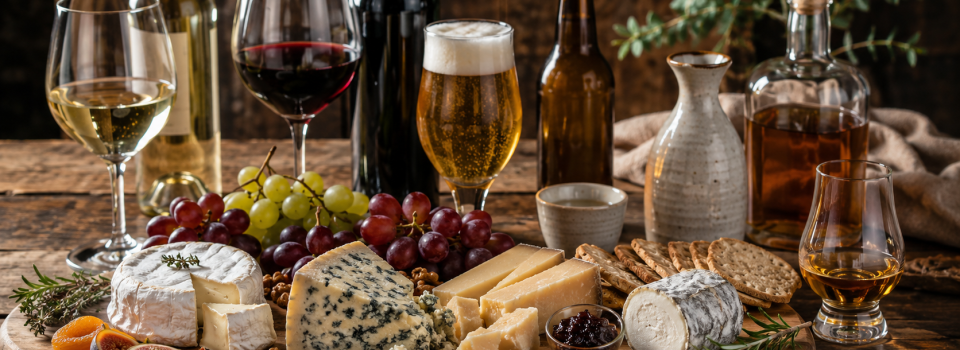
Not all cheese pairings are created equal
Cheese and wine form one of the most iconic combinations at the table. Yet the match is not automatically harmonious. Serving a single red wine with an entire cheese board remains a common habit, but tannins, salt and umami can sometimes make the wine feel harder, mask its fruit and throw the overall balance off course.
After all, no two cheeses are alike. A fresh goat’s cheese, a creamy Brie, an aged Comté and a powerful blue cheese have very different textures, levels of salt and aromatic intensity. To create a successful cheese and drink pairing, it is therefore better to start with the style of the cheese rather than apply one universal rule.
White, sparkling and sweet wines are often especially versatile. Acidity cuts through richness, bubbles refresh the palate, and sweetness balances salty cheeses. But wine is not the only option worth exploring: beer, sake, cider and spirits can lead to combinations that are both compelling and unexpected.
Structured training, such as our WSET courses in wine, beer, sake and spirits, helps develop a precise vocabulary, a more analytical approach to tasting and a deeper understanding of different styles.
The aim of this article is simple: to explain what makes a pairing work, revisit the great classics and help you build your own combinations with greater confidence.
1. Why is cheese so difficult to pair?
Cheese brings together several elements that directly influence tasting: fat, protein, salt, acidity, umami and aromatic intensity. A successful pairing therefore depends not only on flavour, but also on the interaction between texture, structure and balance.
Fat adds richness, while salt can intensify the bitterness, alcohol or astringency of a drink. Umami may also reduce the perception of fruit and make certain wines appear harder or more austere.
Ageing changes the equation even further. Young cheese is generally moister, fresher and more acidic. As it matures, it loses water and gains concentration, saltiness and aromatic power. A long-aged hard cheese can therefore handle a more structured drink than a fresh cheese.
Red wine illustrates this difficulty particularly well. With a salty, umami-rich cheese, pronounced tannins can seem drier and even slightly metallic. Red wines do not need to be excluded, but supple, fresh and lightly tannic styles are often easier to pair.
The essential rule is therefore simple: look at the cheese before choosing the drink.

2. The main rules for successful cheese and drink pairings
Match the intensity
A delicate cheese can easily be overwhelmed by a drink that is too alcoholic, concentrated or aromatic. Conversely, a powerful cheese requires enough structure, concentration or sweetness to maintain balance.
Use acidity to cut through richness
Acidity refreshes the palate and restores definition after a rich or creamy texture. This is why lively white wines, dry ciders and clean, precise styles of sake work so well with many cheeses.
Make use of bubbles
Sparkling drinks are particularly effective with soft and very creamy cheeses. Bubbles and acidity reduce the feeling of heaviness and prepare the palate for the next bite.
Balance salt with sweetness
Blue cheeses and other strongly salted styles often find balance alongside a sweet drink. Sugar softens salt, pungency and aromatic intensity without erasing the character of the cheese.
Trust regional pairings
Local combinations are often an excellent starting point: Crottin de Chavignol with Sancerre, Comté with Vin Jaune, or Camembert with Normandy cider. They are not infallible, but they usually reflect genuine historical and gastronomic coherence.
Consider the level of ageing
The older a cheese becomes, the more concentrated it generally tastes. The drink should evolve with it: freshness and delicacy for a young cheese, more depth for a mature hard cheese, and richness or sweetness for a powerful blue.
3. Seven essential wine and cheese pairings
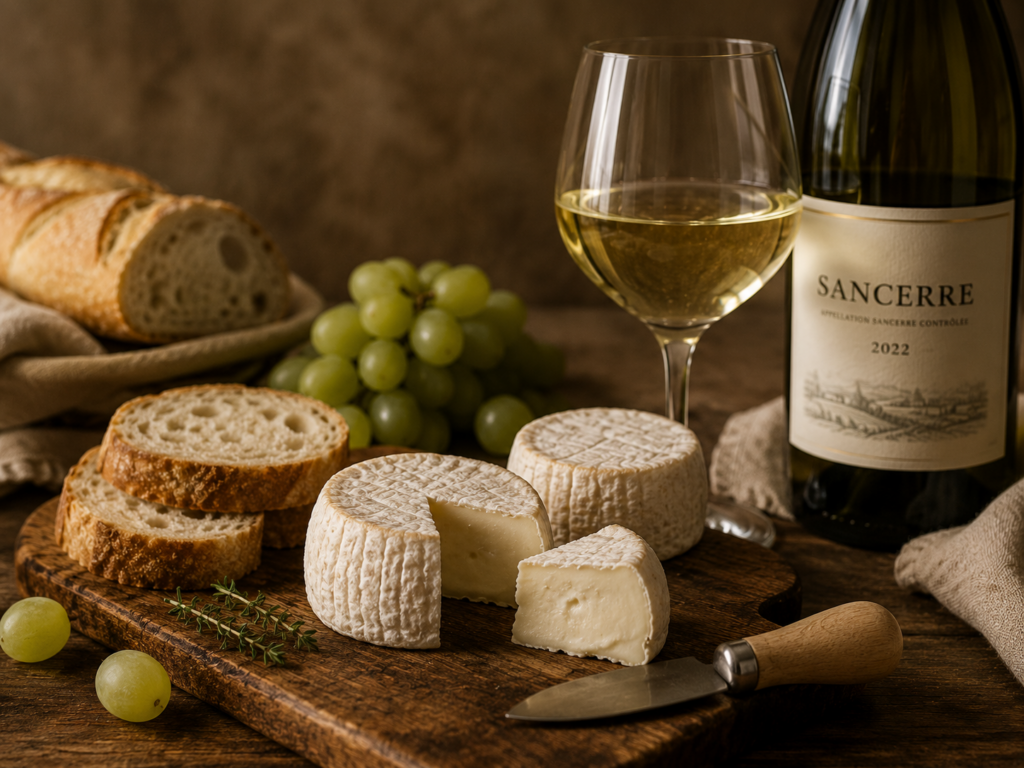
Crottin de Chavignol and Sancerre
Crottin de Chavignol has a tangy freshness and distinctly goaty character that becomes more intense as it matures. The acidity, citrus and herbal notes of Sauvignon Blanc respond with precision.
Alternative: Pouilly-Fumé or Sauvignon de Touraine.
Brie or Camembert and Champagne
The creamy texture of bloomy-rind cheeses calls for freshness. Champagne’s acidity and bubbles lighten the richness, while its brioche-like notes can echo the flavours of the paste and rind.
Alternative: Crémant de Bourgogne, Crémant de Loire or Cava Reserva.
Aged Comté and Vin Jaune
This classic Jura pairing is built on intensity and aromatic similarity. Vin Jaune’s notes of walnut, spice and dried fruit extend those found in aged Comté, while its acidity keeps the combination balanced.
Alternative: topped-up Savagnin or Jura Chardonnay.
Roquefort and Sauternes
Roquefort is salty, creamy, pungent and intense. The sweetness of Sauternes balances its salt, while flavours of honey, candied fruit and spice create a generous contrast.
Alternative: Barsac, Monbazillac or Tawny Port.
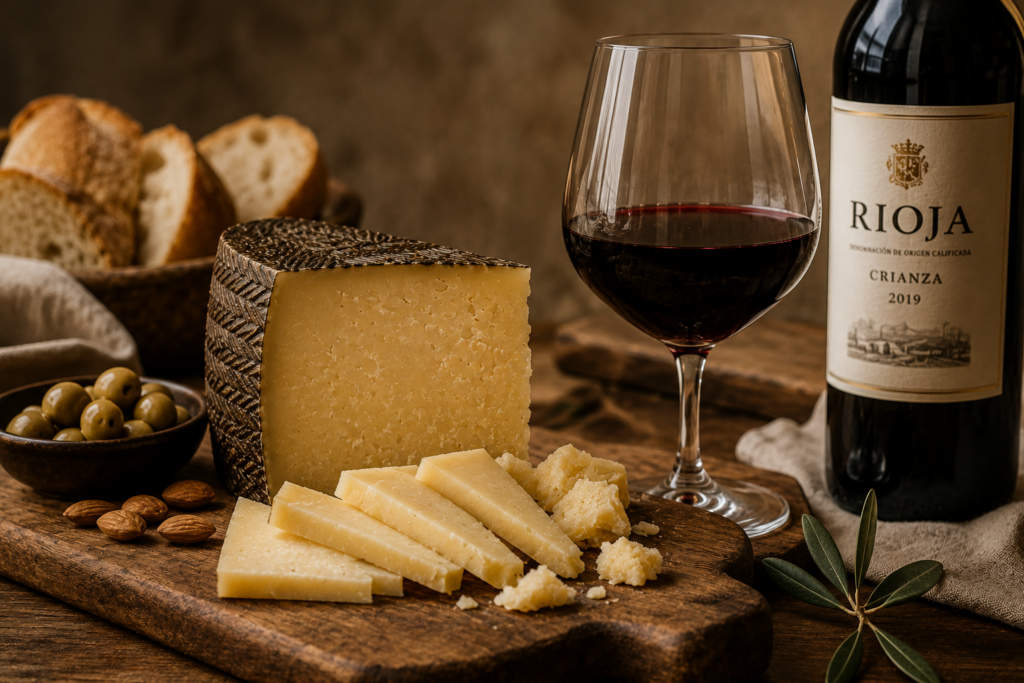
Manchego and Rioja
The firm texture and nutty flavours of Manchego can stand up to the structure of Rioja. Tempranillo’s fruit and acidity accompany the cheese, while its fat helps soften the wine’s tannins.
Alternative: a supple Garnacha or Amontillado Sherry.
Parmigiano Reggiano and Chianti Classico
Parmigiano Reggiano is salty, crumbly and highly savoury. The acidity of Sangiovese refreshes the palate, while its cherry and herbal notes contrast with the cheese’s concentration and umami.
Alternative: dry Lambrusco or a structured Italian white wine.
Munster and Gewurztraminer
Munster has a powerful rind, but its interior is often softer and more delicate than expected. Gewurztraminer offers the intensity, roundness and occasional touch of sweetness needed to envelop the cheese.
Alternative: Alsace Pinot Gris or off-dry Riesling.
These combinations show that there is no single “best wine and cheese pairing”. Some work through contrast, others through aromatic similarity or a careful balance of intensity.
4. Why white and sparkling wines are often excellent cheese partners
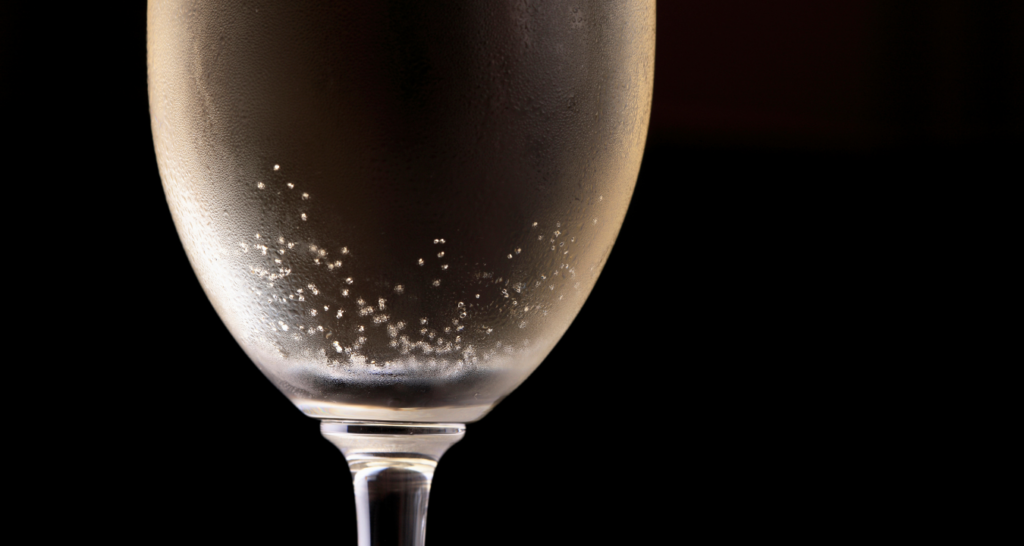
Pairing white wine with cheese offers one major advantage: white wines generally lack the tannins that salt and umami can make seem harsher. Their acidity also helps refresh the palate and lighten rich textures.
We explore the foundations of food and wine pairing in our WSET wine courses.
The diversity of white wine creates a wide range of possibilities:
- dry, high-acid styles suit fresh cheeses;
- aromatic whites respond well to washed-rind cheeses;
- fuller Chardonnay styles complement creamy textures;
- medium-sweet and sweet wines balance blue cheeses.
Sparkling wines add the cleansing effect of bubbles. Brie and Champagne, for example, work through the contrast between richness and freshness. The same principle can apply to a structured Crémant or Cava.
Useful reference points include goat’s cheese with Sauvignon Blanc, Époisses with a full-bodied Chardonnay, Brie with Champagne, and fondue with off-dry Riesling.
White wines are not automatically better than reds. They simply provide a more flexible starting point, which must still be adapted to the age and intensity of the cheese.
5. Red wine and cheese: when does the pairing really work?
A red wine and cheese pairing becomes more difficult when the wine is highly tannic, alcoholic or extracted. Salt and umami can intensify astringency and reduce the perception of fruit.
Red wines tend to work best with cheeses that are:
- sufficiently mature;
- firm or hard in texture;
- concentrated in flavour;
- salty, but not excessively so.
Pinot Noir and Gruyère create a supple, fresh combination. The wine’s moderate tannins complement the firm texture without clashing with the salt.
Gamay and Comté rely on fruit, acidity and gentle tannins. This pairing is especially suitable for young or moderately aged Comté.
Cabernet Sauvignon and mature cheddar can work when the cheese has enough concentration to stand up to the wine. A Cabernet that has already softened with age is generally preferable to a young, austere example.
Finally, Rioja and Manchego form a pairing based on structure and regional identity: the fruit and spice of the wine complement the firm texture and nutty flavours of the cheese.
The main mistake is serving one powerful red with the entire cheese board. Fresh and very creamy cheeses often prefer a lively white or sparkling wine, while blue cheeses usually respond better to sweetness.
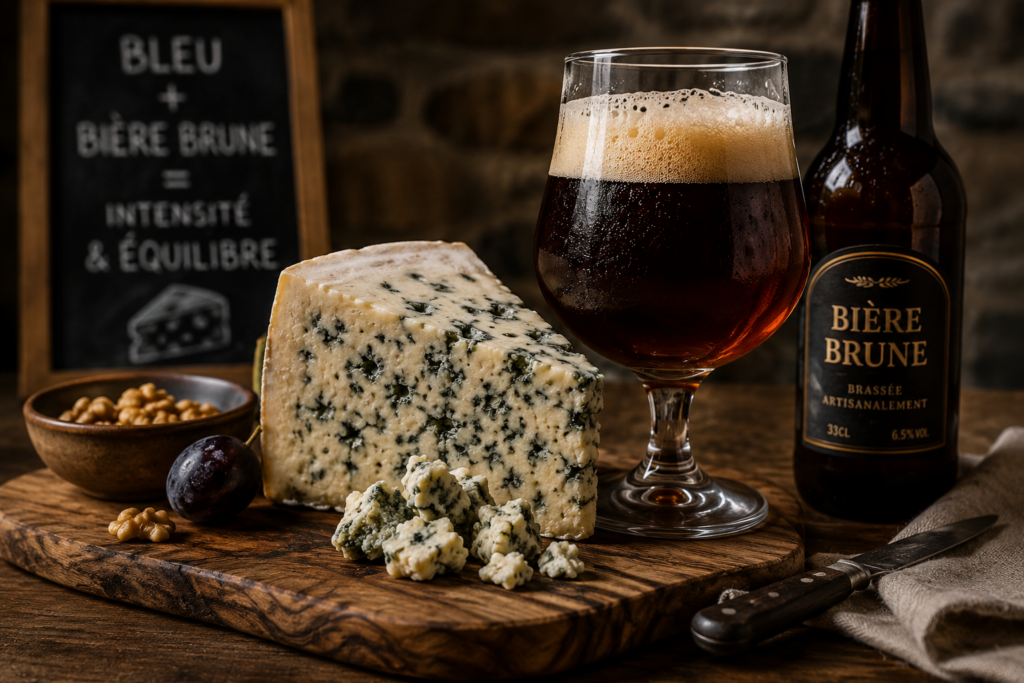
6. Beer and cheese pairings to try
Beer works well with cheese thanks to its carbonation, bitterness and malty sweetness. Toasted, fruity and caramelised flavours can also echo those created by the rind and the ageing process.
We explore the principles of food and beer pairing in our WSET beer courses.
A few combinations to try:
- fresh goat’s cheese and wheat beer: freshness, citrus and spice;
- mature cheddar and IPA: aromatic intensity and hops, without excessive bitterness;
- Comté and amber beer: an echo of nutty and caramel flavours;
- blue cheese and dark beer: malty richness against salt and intensity;
- Munster and Alsace beer: a regional, aromatic yet balanced pairing.
Bitterness should always remain proportionate to the intensity of the cheese. A heavily hopped IPA can easily overwhelm a delicate style.
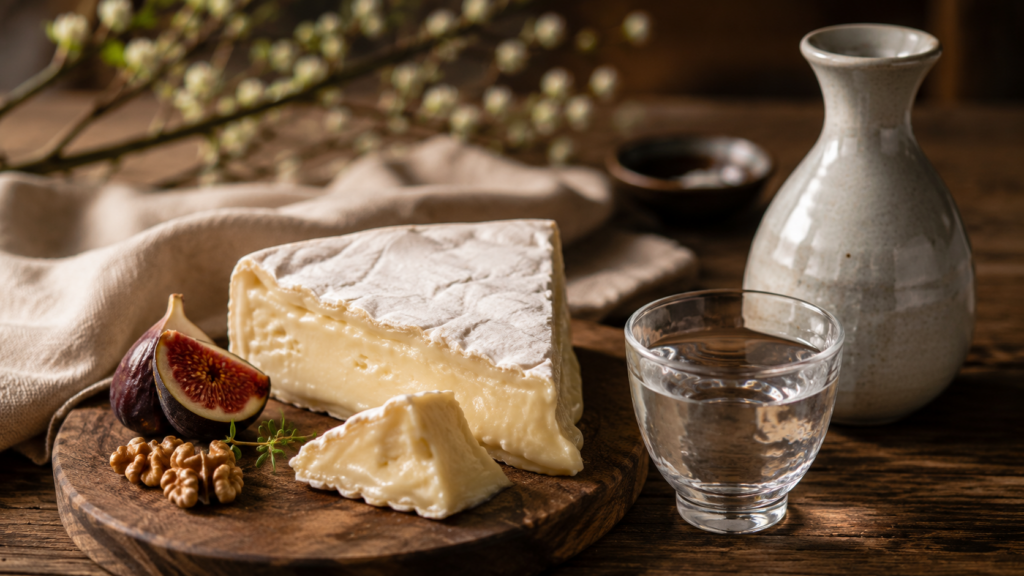
7. Cheese and sake: the underrated umami pairing
Sake and cheese often share a strong umami character. Sake is also low in astringency, allowing it to accompany salt and richness without creating the hardness sometimes found with tannic red wines.
We cover the foundations of food and sake pairing in our WSET Japanese sake courses.
Some combinations to explore:
- fresh goat’s cheese and lively sake;
- Brie or triple-cream cheese and Junmai;
- Parmesan or Comté and a rich, savoury sake;
- blue cheese and sweet or aged sake.
Sparkling sake can also work well with creamy cheeses. Serving temperature changes the pairing: chilled sake tends to feel cleaner and more precise, while gently warmed sake often gains roundness and texture.
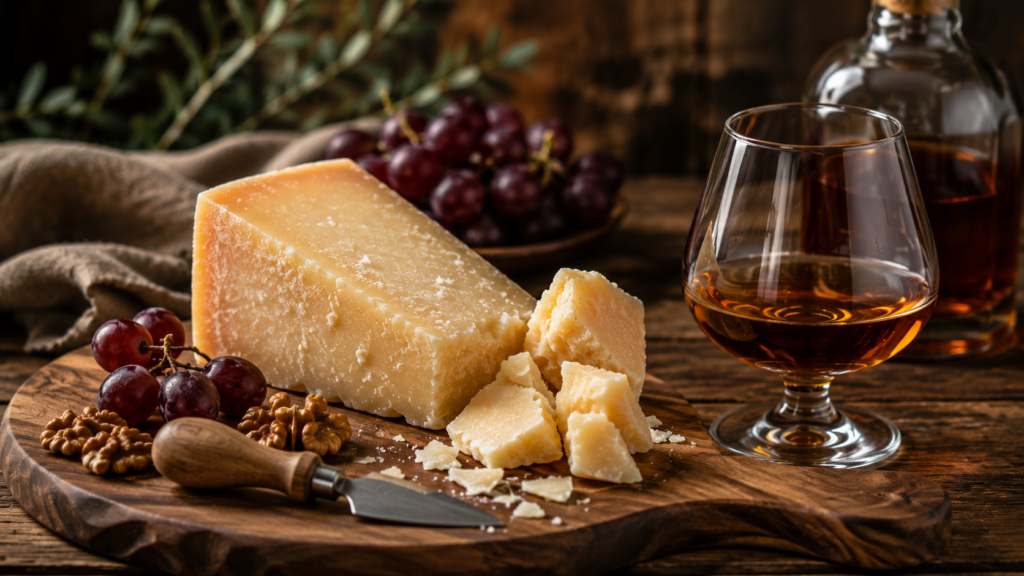
8. Cheese and spirits: powerful pairings
Spirits require precision. Their higher alcohol and aromatic concentration can easily dominate the cheese. Serve them in small quantities, ideally alongside mature, firm and powerful cheeses.
We explore the foundations of food and spirits pairing in our WSET spirits courses.
Some combinations worth trying:
- aged Comté and whisky;
- mature cheddar and bourbon;
- blue cheese and Port or another sweet drink;
- Parmesan and Cognac;
- smoked cheese and mezcal.
A small amount of water can soften a whisky, while an overly warm serving temperature may intensify the perception of alcohol. These combinations should be treated as tasting experiments rather than universal rules.
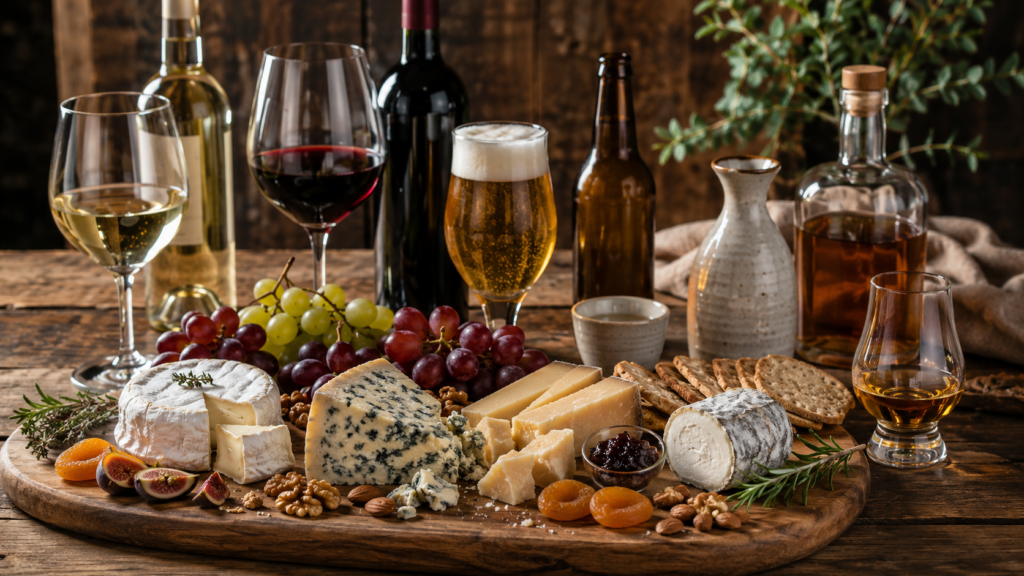
9. How to build a cheese board with several drinks
For a clear and balanced tasting, limit the board to four or five cheeses. Include a range of styles, such as a fresh cheese, a soft cheese, a hard cheese and a blue.
Serve them from the most delicate to the most powerful. Begin with fresh, light styles, continue with creamy or mature cheeses, and finish with the saltiest and most intense.
Two or three drinks are enough:
- begin with a sparkling wine or lively white;
- continue with beer, sake or a more structured wine;
- finish with something sweet or more concentrated.
Serve small quantities and compare the sensations. Does the drink lighten the richness? Does it accentuate the salt? Does it extend particular flavours? This approach turns a cheese board into a genuine tasting exercise.
10. What cheese pairings can teach us about tasting
Cheese pairings are an excellent way to learn about food and wine pairing, while also developing a broader understanding of tasting. They encourage us to observe how acidity, sweetness, tannins, alcohol, effervescence, aromatic intensity and umami interact both in the glass and on the palate.
A lively wine may lighten a rich texture, while a sweet drink can balance salt. Conversely, pronounced tannins can become drier alongside an umami-rich cheese. The aim is not to memorise a list of supposedly perfect pairings, but to learn how to reason from the precise style of both the cheese and the drink.
This is also what structured tasting education provides: more accurate vocabulary, an analytical method like in the WSET, a clearer understanding of styles and greater confidence in building your own pairings.
Our WSET courses in wine, beer, sake and spirits help connect the technical characteristics of a drink with the sensations it creates, before applying that understanding at the table. The goal is no longer simply to know which pairing works, but to understand why it works.
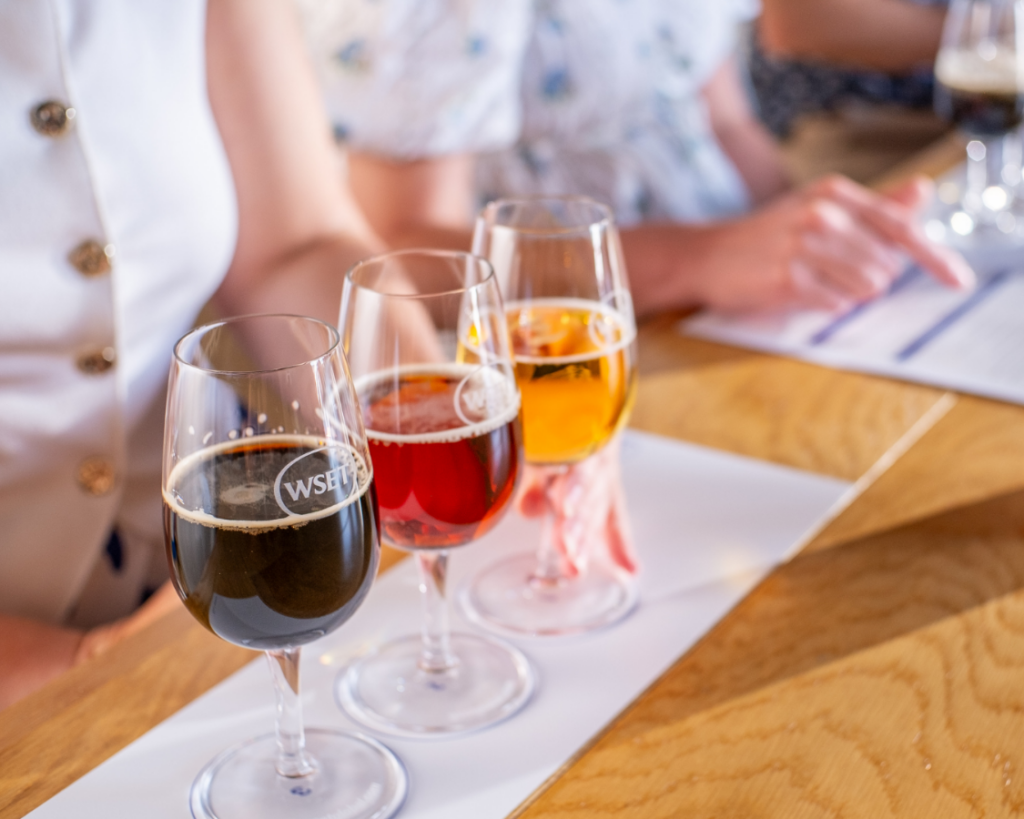
The best pairing is the one you understand and appreciate
Classic pairings remain useful because they rely on coherent principles: acidity cuts through fat, sweetness balances salt, bubbles refresh the palate, and levels of intensity need to remain comparable.
But cheese can work with far more than red wine. White wine, sparkling wine, beer, sake, cider and spirits each provide a different interpretation. The key is to consider texture, ageing, salt, umami and aromatic intensity.
Structured education, such as our WSET courses in wine, beer, sake and spirits, helps develop a precise vocabulary, an analytical tasting method and a deeper understanding of style. Instead of memorising combinations, you learn how to build your own pairings with confidence and method.