Why Pinot Noir is so fascinating
Few grape varieties manage to be both so delicate in the glass and so demanding in the vineyard. Pinot Noir is probably one of the best examples.
One of the world’s most famous red grape varieties, it can produce fine, fragrant and immediately appealing wines, but also some of the most complex, precise and age-worthy reds in the world. Its reputation is closely associated with Burgundy, where it reaches some of its greatest expressions, but Pinot Noir is now grown in many cool-climate wine regions, from Germany and Oregon to New Zealand.
It also plays a major role in sparkling wine production, particularly in Champagne, where it contributes structure, fruit and depth.
In this article, as in our WSET wine courses, we will explore its identity, how it is grown, its major regions, its tasting profile and, above all, the factors that explain why one Pinot Noir can taste so different from another.
1. What is Pinot Noir?
Pinot Noir is an ancient black grape variety historically associated with Burgundy, where it has played a central role for centuries. It also has a long history in several other European wine regions, but Burgundy is where much of its international reputation was established.
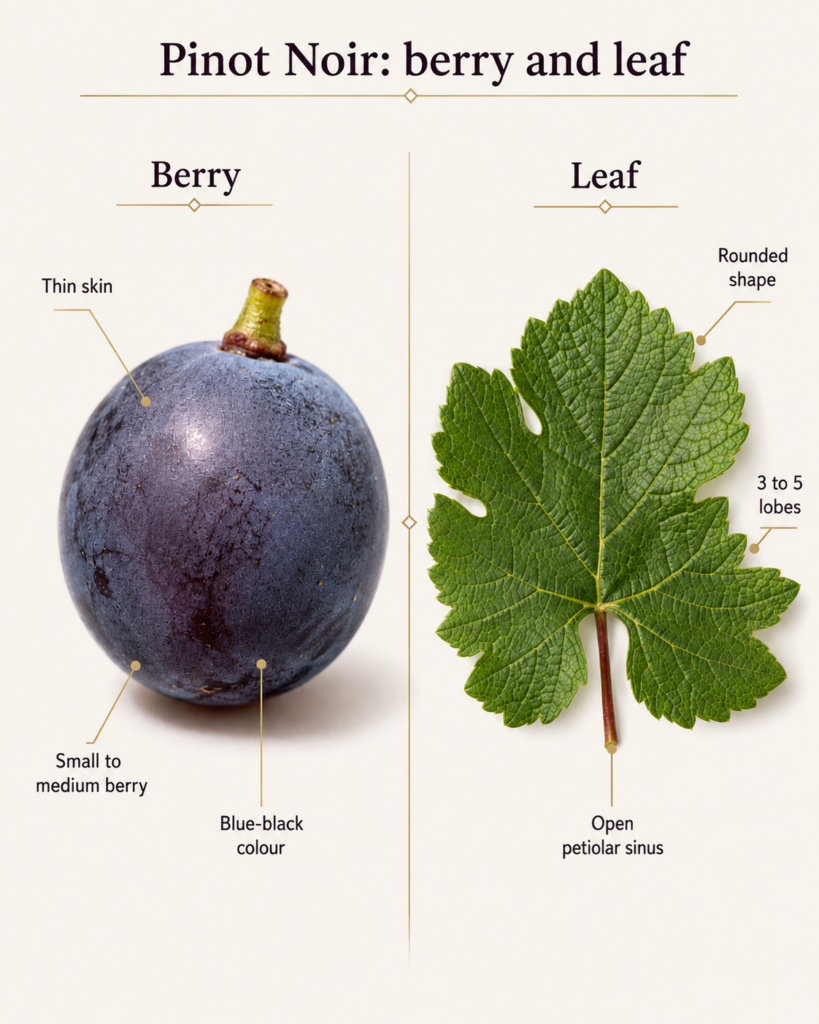
Physically, Pinot Noir is characterised by its relatively thin skins. This partly explains why Pinot Noir wines generally have less intense colour than wines made from varieties such as Cabernet Sauvignon, Syrah or Malbec. It also contributes to their typically more delicate tannin structure.
Pinot Noir belongs to a particularly interesting genetic family. The variety is known for its tendency to mutate relatively easily, giving rise to variants including Pinot Gris and Pinot Blanc. These share a common genetic origin but now produce very different wine styles.
Long regarded primarily as a Burgundian grape, Pinot Noir is now cultivated across many wine regions worldwide. It remains particularly suited to cool to moderate climates, where it can retain its acidity, aromatic finesse and overall balance.
2. Why is Pinot Noir so difficult to grow?
Growing Pinot Noir requires considerable precision because the variety responds strongly to climate, vineyard site and viticultural decisions.
Its relatively early budding makes it vulnerable to spring frosts, while its early ripening helps explain why it can perform successfully in cool climates. Yet this precocity creates a delicate balance: in conditions that are too cool, grapes may struggle to reach full ripeness; in climates that are too warm, acidity can fall quickly and the fruit may become considerably riper, sometimes at the expense of finesse.
Pinot Noir bunches can also be relatively compact, while the berries have thin skins. Under humid conditions, this can increase susceptibility to rot and certain diseases. Canopy management, airflow around the bunches and careful yield management therefore become important tools for maintaining healthy fruit and encouraging even ripening.
The choice of clone and planting material also matters. Some clones may be selected for yield, others for berry size, structure or quality potential.
In warmer regions, growers often look for sites capable of retaining freshness through altitude, cooler exposures, proximity to the ocean or other forms of maritime influence.
Key takeaway: WSET Level 3
The final style of a Pinot Noir results from the interaction between climate, site and viticultural decisions. Together, these factors influence grape ripeness and therefore the wine’s acidity, alcohol, fruit profile and structure.
3. What does Pinot Noir taste like?
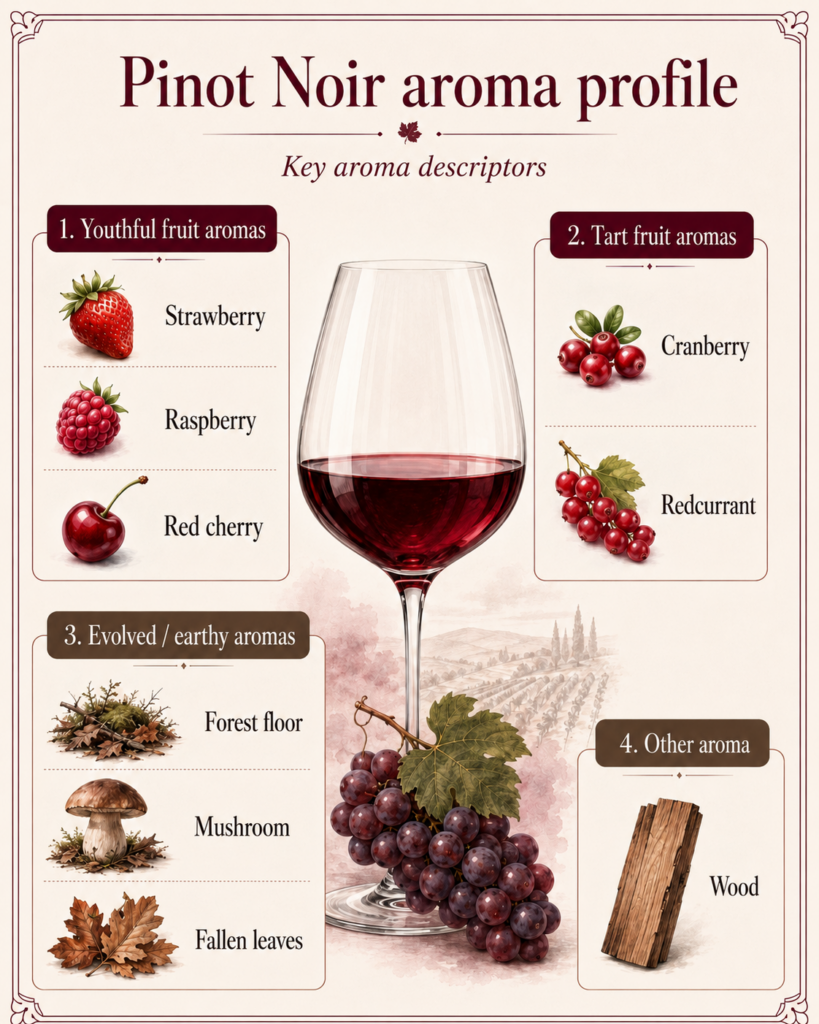
The taste of Pinot Noir is usually associated more with finesse than sheer power. When young, it commonly shows aromas of strawberry, raspberry and red cherry, sometimes accompanied by redcurrant or cranberry depending on climate and ripeness. Some expressions can also display floral, spicy or subtly vegetal notes.
With bottle age, the aromatic profile changes significantly. Fresh fruit becomes more mature or dried, while tertiary aromas such as forest floor, mushroom, dried leaves, leather and damp earth can emerge. This ability to develop complex tertiary characteristics is one of the reasons the finest Pinot Noirs are so highly regarded.
On the palate, Pinot Noir typically has high acidity, low to medium tannins and a light to medium body, although more structured examples certainly exist. Its colour is also often relatively pale for a red wine, partly because of its thin skins.
But there is no single Pinot Noir flavour profile. Climate, ripeness, extraction, oak use and bottle age can all dramatically alter its expression. This is precisely what makes Pinot Noir so fascinating to taste.
4. Cool climate or warmer conditions: why Pinot Noir changes so much
Pinot Noir is particularly sensitive to its growing conditions, which explains why its style can vary dramatically from one region to another.
In a cool climate, Pinot Noir often produces wines centred around tart red fruit such as cherry, raspberry, redcurrant or cranberry. Acidity remains high, alcohol is generally more moderate and the overall expression tends to feel more delicate. If the grapes struggle to ripen fully, more noticeable vegetal characteristics may also appear.
Under warmer conditions, the profile moves towards riper fruit. Cherry may become richer, strawberry more generous, and some wines can even develop darker fruit characteristics. Alcohol tends to rise, acidity usually feels less sharp and the wine can gain greater body and roundness.
However, simply describing a region as “cool” or “warm” does not tell the whole story. Altitude, latitude, aspect, fog, proximity to the ocean and vintage conditions can all significantly affect ripening and the final balance of the wine.
This is an important tasting principle: climate does not only determine aroma. It directly influences acidity, alcohol, fruit ripeness, structure and the overall perception of freshness in Pinot Noir.
5. Burgundy: why is it the benchmark for Pinot Noir?
When we talk about Pinot Noir in Burgundy, we are talking about the region that has shaped much of the grape’s global reputation. Pinot Noir has expressed an extraordinary diversity of styles here for centuries, making Burgundy one of the world’s key reference points for understanding how terroir can influence a single grape variety.
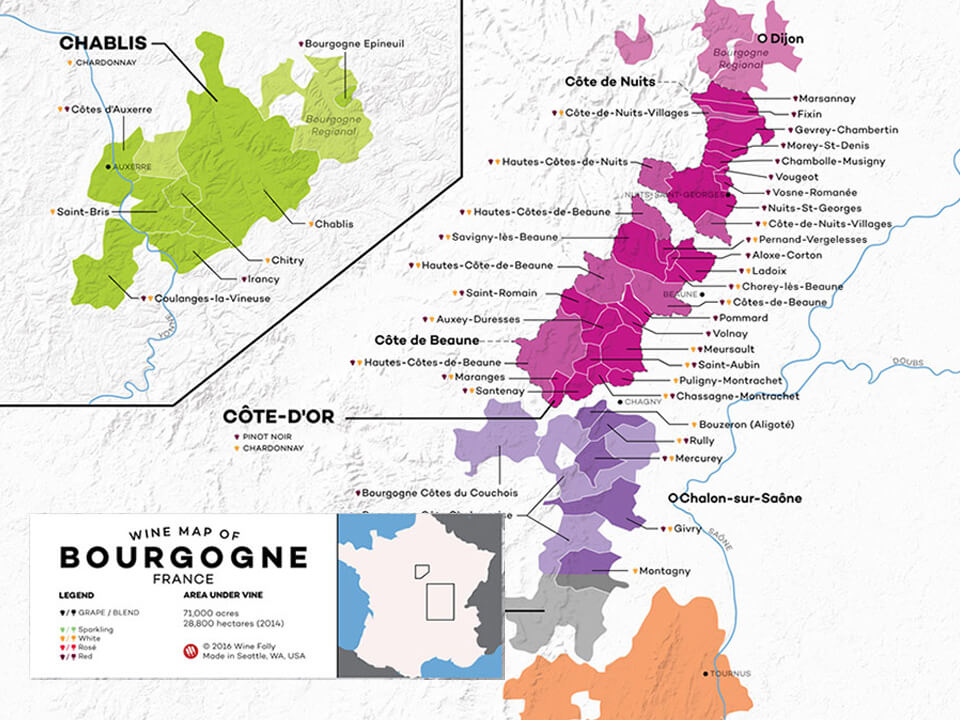
At the heart of this reputation lies the Côte d’Or, divided between the Côte de Nuits in the north and the Côte de Beaune in the south. This relatively small area contains some of the most famous Pinot Noir appellations in the world, including Gevrey-Chambertin, Chambolle-Musigny, Vosne-Romanée, Pommard and Volnay.
What makes Burgundy especially interesting is the importance of precise vineyard location. Aspect, slope, drainage, soil composition and the ability of a site to achieve consistent ripeness can all change the resulting wine. Two vineyards only a few kilometres — or sometimes a few hundred metres — apart can therefore produce Pinot Noirs with noticeably different fruit profiles, structures, levels of finesse and ageing potential.
This logic is reflected in Burgundy’s hierarchy, which includes regional, village, Premier Cru and Grand Cru appellations. As you move up the hierarchy, the geographical origin of the grapes becomes increasingly specific.
At a more advanced level, Burgundy perfectly demonstrates that great Pinot Noir is never the product of grape variety alone. Site, yield, ripeness, vintage and producer decisions constantly interact. It is this combination that makes Burgundy such an important region for studying Pinot Noir.
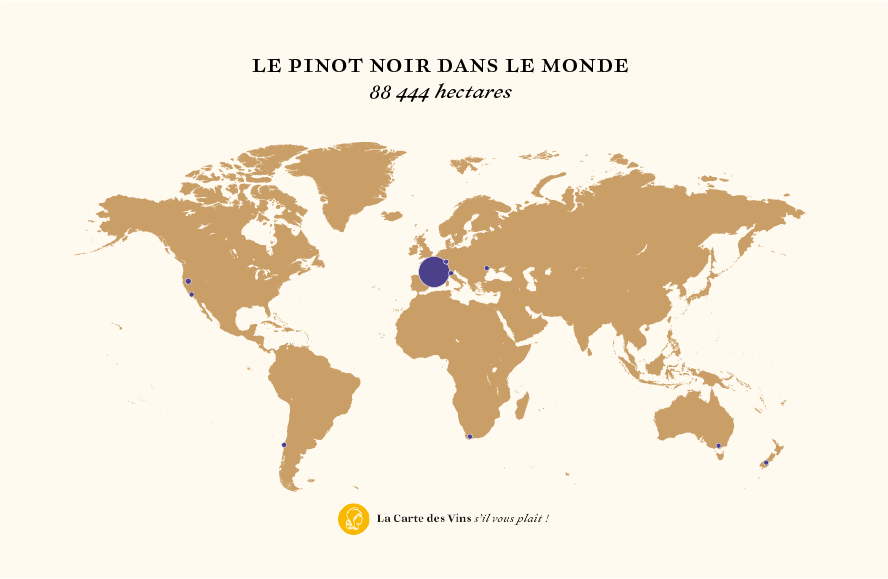
6. The major Pinot Noir regions around the world
Although Burgundy remains the historical benchmark, Pinot Noir has become established in many cool and moderate-climate regions around the world. This is exactly what makes it so interesting: the same grape can produce dramatically different wines depending on temperature, altitude, maritime influence and the length of the growing season.
Champagne
Pinot Noir is one of the major grape varieties of Champagne. In blends, it typically contributes structure, body and fruit. Champagne made exclusively from black grape varieties, including Pinot Noir, may be labelled Blanc de Noirs. These wines can show a particularly fruity, vinous, broad and structured character.
Germany
In Germany, particularly in regions such as Baden, the Ahr Valley and Pfalz, Pinot Noir is known as Spätburgunder. Quality has risen significantly, and the best examples now show genuine depth and complexity. Styles range from fine, fresh and delicate to considerably more structured expressions, especially from top vineyard sites.
Oregon
The Willamette Valley has become one of the leading American references for Pinot Noir. Its relatively cool climate encourages wines often characterised by red fruit, freshness and finesse, generally with an elegant structure.
California
In California, some of the most successful Pinot Noir areas benefit from significant ocean influence, including Sonoma Coast, Russian River Valley and Sta. Rita Hills in Santa Barbara County. Styles are generally riper, more generous and more fruit-forward than those traditionally associated with Burgundy.
New Zealand and Australia
In New Zealand, Central Otago, Marlborough and Martinborough can produce very different styles. Central Otago often gives richer, riper and more concentrated expressions, while other areas may produce fresher and more fragrant wines depending on site.
In Australia, Pinot Noir performs particularly well in cooler regions such as Yarra Valley, Mornington Peninsula and Tasmania.
This international panorama, much like our WSET training sessions, highlights one essential idea: Pinot Noir is an excellent grape for understanding how climate and vineyard site translate directly into the glass.
7. How is Pinot Noir made… and can it age?
Pinot Noir winemaking requires considerable precision because the grape has thin skins, naturally moderate colour and a generally more delicate tannin structure than varieties such as Cabernet Sauvignon or Syrah. The challenge is therefore to extract enough colour, aroma and structure without losing the finesse that defines the variety.
The length of maceration, along with the intensity of techniques such as punch-downs and pump-overs, varies according to the desired style. Gentler extraction can help preserve fruit and delicacy, while more intensive extraction can create greater structure.
Some producers also ferment some or all of the fruit as whole bunches. The stems can contribute structure, freshness, spice and occasionally herbal characteristics, although the result depends heavily on stem ripeness and the producer’s stylistic goals.
Oak ageing, often in French barrels for premium examples, can also play an important role. New oak may contribute spice, vanilla and texture, while older barrels tend to influence the wine’s development and oxygen exposure more than its aroma. In either case, the challenge is to avoid overwhelming Pinot Noir’s naturally delicate fruit.
And yes, Pinot Noir can age extremely well. But not every bottle is designed for long-term cellaring. Simple, fruit-driven styles are usually best enjoyed relatively young, while top Pinot Noirs combine concentration, acidity, fine tannins, high-quality fruit and overall balance.
With age, fresh red fruit can develop into dried fruit, forest floor, mushroom, spice and earthy notes. One common misconception is therefore worth correcting: pale colour does not mean poor ageing potential. With Pinot Noir, longevity depends far more on balance and structure than on colour intensity.
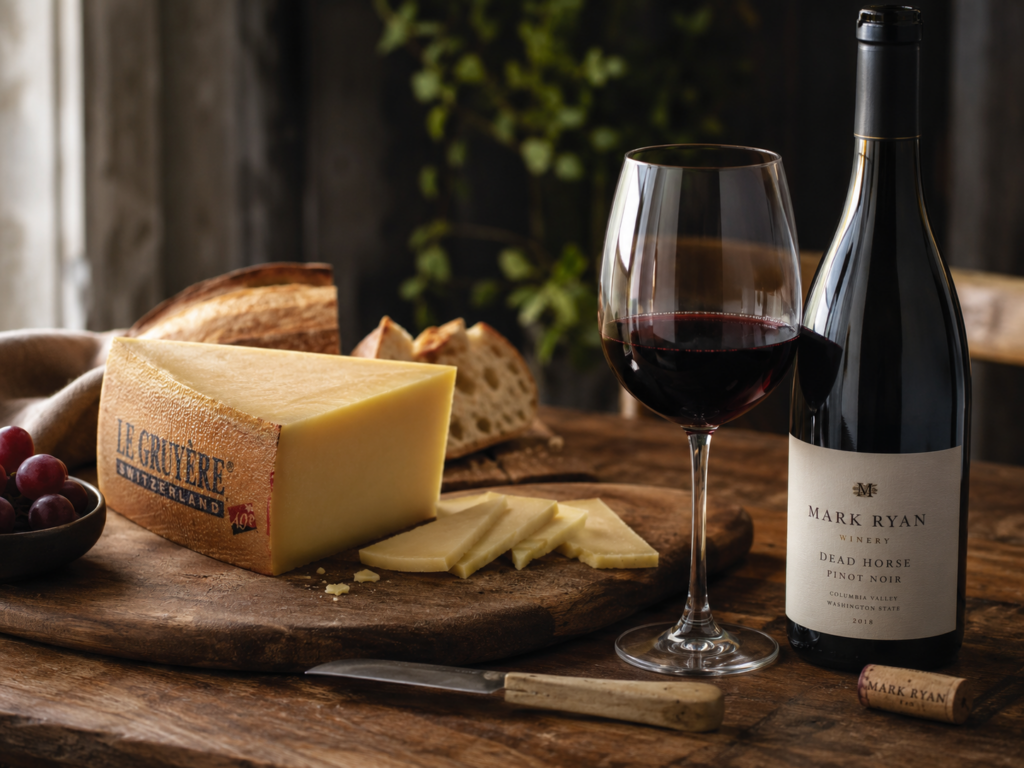
8. What food goes with Pinot Noir… and how should you choose a bottle?
Pinot Noir is highly versatile with food thanks to its often high acidity and generally moderate tannins. This combination allows it to accompany dishes that more powerful red wines could easily overwhelm.
It works particularly well with duck, roast poultry, veal and mushrooms, as well as richer fish such as salmon or tuna. Its earthy notes naturally complement mushroom-based dishes, while its acidity helps balance richness. Its softer tannins also make it better suited to more delicate proteins.
The style of Pinot Noir matters, however. A fresh, light expression will generally work better with subtle dishes, while a riper, more concentrated or more heavily oaked wine can accompany richer food. For cheese, moderately flavoured styles are usually preferable so that the wine is not overwhelmed.
To choose a good Pinot Noir, start by looking at origin rather than simply the grape name. Climate already provides a useful indication of the likely style: cooler and more taut, or riper and more generous. The producer, vintage — particularly in cool regions — and level of oak ageing can also have a major impact.
Finally, ask yourself what you are looking for: a fruit-driven Pinot Noir to enjoy young, or a more structured wine designed to evolve? Pinot Noir can be expensive to produce, and great vineyard sites are scarce, which helps explain some of the high prices. But more expensive does not automatically mean better. The right wine is the one that matches the style and occasion you are looking for.
9. What Pinot Noir teaches us about wine tasting
Pinot Noir is particularly useful for learning how to taste wine because it encourages us to connect what we perceive in the glass with the factors that created the style.
Climate directly influences fruit ripeness, acidity and alcohol. Yield can affect concentration. Site — including aspect, altitude and maritime influence — affects the speed of ripening and aromatic expression. In the winery, the level of extraction changes tannin and structure, while whole-bunch fermentation can add structure, spice or vegetal notes. Oak influences both aroma and texture, and with age, fresh fruit gradually develops into tertiary aromas such as forest floor, mushroom, spice and earth.
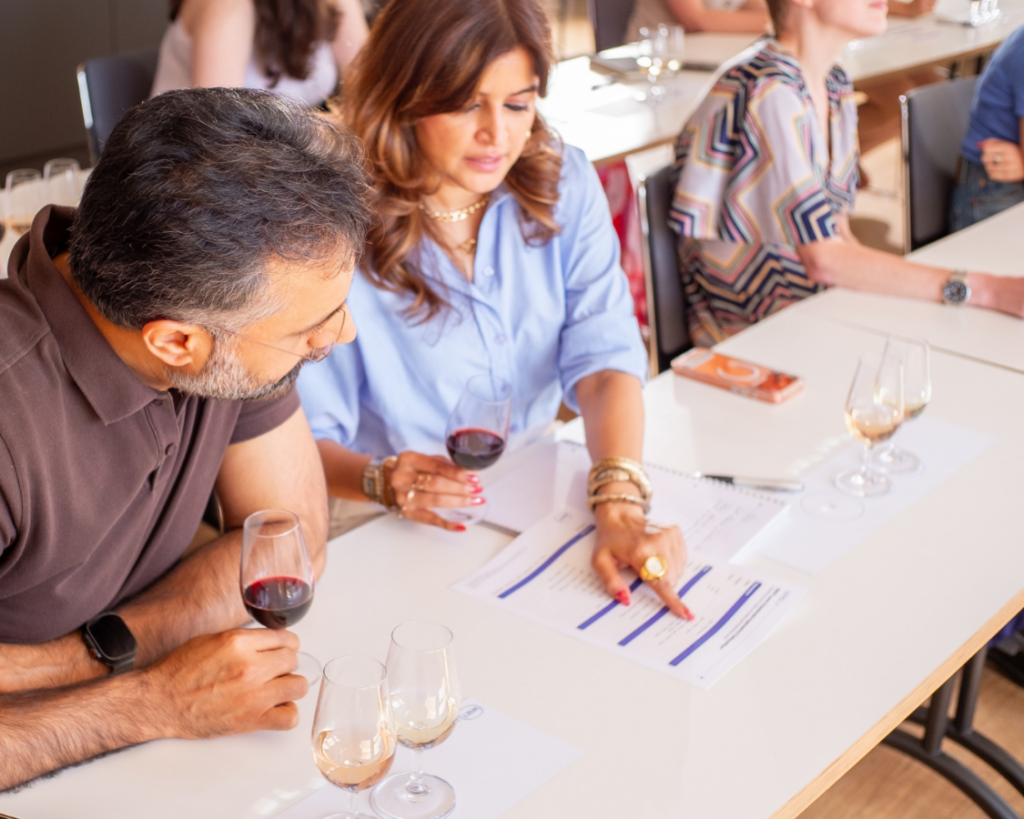
This is exactly what structured tastings in our WSET courses are designed to teach: not simply identifying aromas, but understanding why a wine tastes the way it does.
A WSET Level 2 course establishes the fundamentals. WSET Level 3 goes further by connecting viticulture, winemaking, climate and style. At Diploma level, this analysis becomes even more detailed, with a deeper examination of the factors affecting both wine style and quality.
Pinot Noir: a grape that can never be reduced to fruit alone
Pinot Noir is delicate, demanding and remarkably expressive of its environment. Few grape varieties reveal the effects of climate, site, vintage and producer decisions with such precision.
Burgundy remains its historical benchmark, but Pinot Noir now displays extraordinary diversity around the world. Depending on origin and intended style, it can produce fresh, supple reds designed for immediate enjoyment, as well as complex, structured wines capable of ageing for many years.
That is also what makes the grape so valuable from an educational perspective.
Understanding Pinot Noir is not about memorising a list of aromas. It is about understanding how climate, vineyard conditions and winemaking choices ultimately appear in the glass.
Our WSET wine courses are designed to help you analyse these factors through a structured method and make clearer connections between production, style and quality.