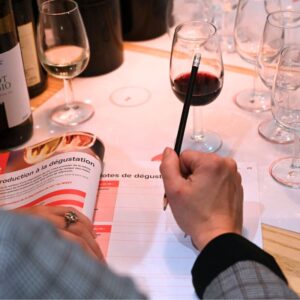

Learning about wine does not happen only in a classroom. It is also possible to learn about wine differently, through listening, reading and watching, gradually building a culture that is richer, more vivid and more connected to the real world.
Podcasts, magazines and documentaries all play a valuable role here. They help train the ear by familiarising you with professional vocabulary; they sharpen the eye by putting images on terroirs, gestures and regions; and they also build broader wine culture by following changes in the sector, major producers, trends and debates in the world of wine. They are also excellent tools for expanding your wine vocabulary and refining the way you talk about wine.
These formats are extremely enriching, but they do not replace a structured progression. They provide reference points, spark curiosity and open doors. What they do not always do is organise knowledge, build a real tasting method or prioritise information within a solid learning framework, as our WSET courses do. It is worth noting that beginning with WSET Levels 1 and 2 is often recommended in order to structure your learning properly before broadening your wine knowledge further through other resources.
That is precisely the purpose of this article: to offer a useful selection for learning about wine differently in everyday life, while showing how these resources can become genuine complements to a more structured training path.
1. Podcasts, magazines and documentaries: three formats, three different uses
When you are trying to enrich your wine culture, not all types of content play the same role. That is precisely what makes them interesting: each one develops a different way of learning about wine.
Wine podcasts are especially useful for learning on the move. They allow you to listen to professionals, become familiar with more technical vocabulary, and hear about regions, grape varieties, markets or styles in a flexible and lively format. It is an excellent way to build wine knowledge without necessarily sitting in front of a book or a screen.
Wine magazines, by contrast, play a different role. They help you follow sector news, major trends, changes in certain regions, and debates around climate, markets, styles or producers. They often bring more distance, better information hierarchy and greater critical depth. In that sense, they are valuable tools for developing a more informed and more structured understanding of the wine world.
Documentaries and video platforms are especially powerful because they make wine feel concrete. They show terroirs, landscapes, producers, gestures, cellars, harvests and climatic conditions. Where a text explains, the image embodies. It is a very effective way to better understand the link between a wine, a place and a culture of production.
In other words, each format develops a different kind of understanding. And it is precisely by combining these approaches that you begin to learn about wine differently — in a way that is more vivid, more regular and often more lasting.
2. The wine podcasts worth listening to in order to enrich your wine culture
The wine podcast format remains particularly interesting for learning about wine differently. It allows you to listen to professionals, get used to more precise vocabulary and build your wine culture in moments when you would not necessarily sit down to read a book or a magazine. What makes the difference, however, is editorial quality: for a podcast to be truly useful, it needs to be clear, serious, consistent and pedagogically valuable.
For beginners, a few accessible but well-constructed formats stand out.
- glouglou has the advantage of a lively tone and a real intention to share knowledge, which makes it a strong entry point for people who want to discover wine without unnecessary jargon.
- Le Bon Grain de l’Ivresse is also an interesting reference: the podcast approaches wine through growers, places and sensitivities, with a style that remains both engaging and instructive.
For those who want to go further, some formats are more stimulating on substance.
- Les mains dans le raisin explicitly presents itself as a “science and wine” podcast, which makes it especially useful for anyone who wants to better understand the mechanisms behind taste, viticulture or technical choices.
- Sous la robe explores the link between the land, stories of terroir and their impact on the taste of wine, which makes it a relevant format for developing a more analytical reading of style.
To hear from professionals and follow the sector, other references stand out.
- In Vino remains a long-established reference in the French-speaking world, with a positioning clearly centred on wine and spirits news.
- Wine Challenge may also interest those who enjoy listening to discussions with wine professionals on topics such as careers, tasting and changes in the sector.
Finally, for a broader perspective more directly connected to a training logic, the WSET podcasts are also worth mentioning. They are not focused only on wine, but approach drinks through a strongly educational angle, with themes linked to fermentation, ageing, careers or flavour creation. They are a good complement for anyone who wants to connect general culture with a more structured understanding.
Ultimately, the right podcast depends above all on the purpose you have in mind. The most useful approach is not to listen to ten at once, but to choose a few, follow them regularly, and integrate them into a real learning routine.
3. The magazines and specialised media worth following seriously
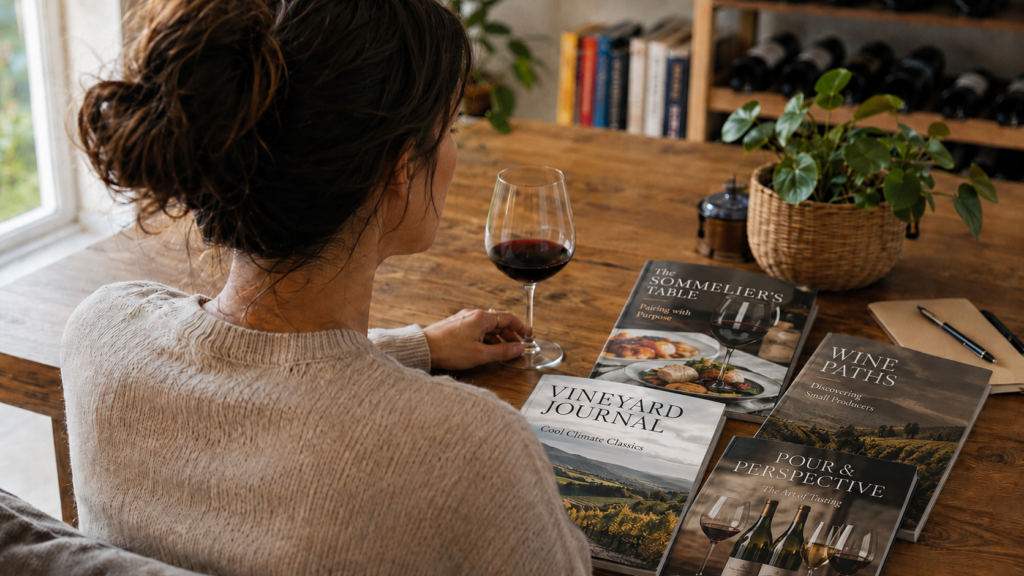
At a time of social media and short-form content, reading a wine magazine or following serious wine media remains essential. Why? Because good content does more than recommend bottles. It also helps you understand markets, gain critical distance, and build real reference points around regions, producers and major sector trends. That is precisely what makes the difference between occasional curiosity and a more solid wine culture.
For a demanding but still accessible general-audience approach, La Revue du vin de France remains a natural reference in the French-speaking world. Its website combines news, wine economics, food and wine pairings, awards, producers and educational content, all with real editorial consistency. It is a strong media outlet for following both the day-to-day life of the sector and some of its more structural changes.
For a more international perspective, Decanter is essential. Founded in London in 1975, it is now one of the most established wine media titles in the world, with an audience in more than 100 countries and a strong ability to cover regions, trends, market issues and major competitions such as the Decanter World Wine Awards. It is particularly useful for broadening your perspective beyond a purely French lens.
For those looking for a more analytical and professional approach, JancisRobinson.com is also a major resource. The site offers articles, analysis, maps, regional features, grape variety profiles, tasting notes and a large volume of in-depth content that makes it a genuine working media resource for learning to read wine with greater precision.
In other words, not all media serve exactly the same purpose. The most useful approach is not to read everything, but to choose a few strong references and follow them consistently. That is often how a wine culture becomes more informed, more critical and more lasting.
4. The documentaries and series worth watching to learn about wine differently
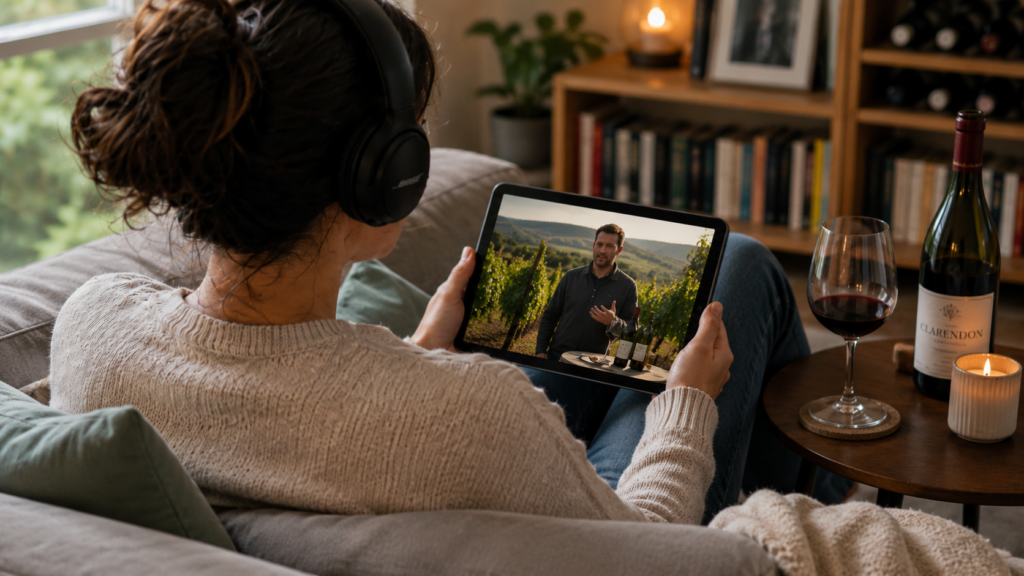
When you are trying to learn about wine, visual media plays a very particular role. A good wine documentary or a well-built series does more than explain: it shows. It lets you see the landscapes, the vineyards, the cellars, the gestures, the producers, the seasons and the constraints of the field. In other words, it anchors wine in something concrete, alive and culturally situated. That is precisely what makes visual formats so useful in a learning journey.
This is also why platforms such as Wine Masters TV have real educational value. Their strength lies in their ability to embody terroirs through producers, regions and concrete stories. They make it easier to understand how a landscape, a climate, a local culture and production choices are then translated into the style of a wine. For anyone looking to enrich their wine culture beyond theoretical notions, this type of content is especially effective.
Another useful resource is SOMM TV, a streaming platform entirely dedicated to wine, gastronomy, travel and hospitality. Created as an extension of the SOMM documentary series, it offers films, shows and educational content specifically designed for this world. It is a highly relevant format for anyone who wants to explore wine in a more immersive and more embodied way.
Among the films worth knowing, A Year in Burgundy remains a valuable reference. The documentary follows several Burgundy winegrowing families over the course of a full vintage, which makes it an excellent tool for understanding the relationship between climate, the rhythm of the vineyard, human decisions and the final result in the glass. In the same spirit, A Year in Champagne offers a way into the region through different producers and house styles.
These formats are valuable because they help you grasp three things at once:
- the embodiment of terroirs, by showing where wines really come from;
- the understanding of gestures, by making production choices visible;
- and the link between landscape, culture and style, which is often difficult to perceive through reading alone.
In that sense, wine documentaries and series are not simply “pleasure content”. They are genuine learning tools for those who want to understand wine not only as a product, but as the meeting point of a place, a culture, a set of gestures and a style.
5. What these resources really bring… and where their limits lie
Podcasts, magazines and documentaries have real value in a wine learning journey. First of all, they help broaden general knowledge: through them, you discover regions, producers, debates, trends and market contexts. They also help build vocabulary, by regularly exposing you to more precise words, descriptions and ways of talking about wine. They are also a good way to better understand styles, terroirs and the major production logics, while nurturing something that remains essential in wine: curiosity.
But these formats also have their limits. They enrich, stimulate and open doors.
What they do not always do, however, is help structure knowledge or prioritise information. When you learn on your own, it is easy to accumulate content without always knowing what is fundamental, what is secondary, or how to connect the different pieces together. That is often where progress becomes more blurred.
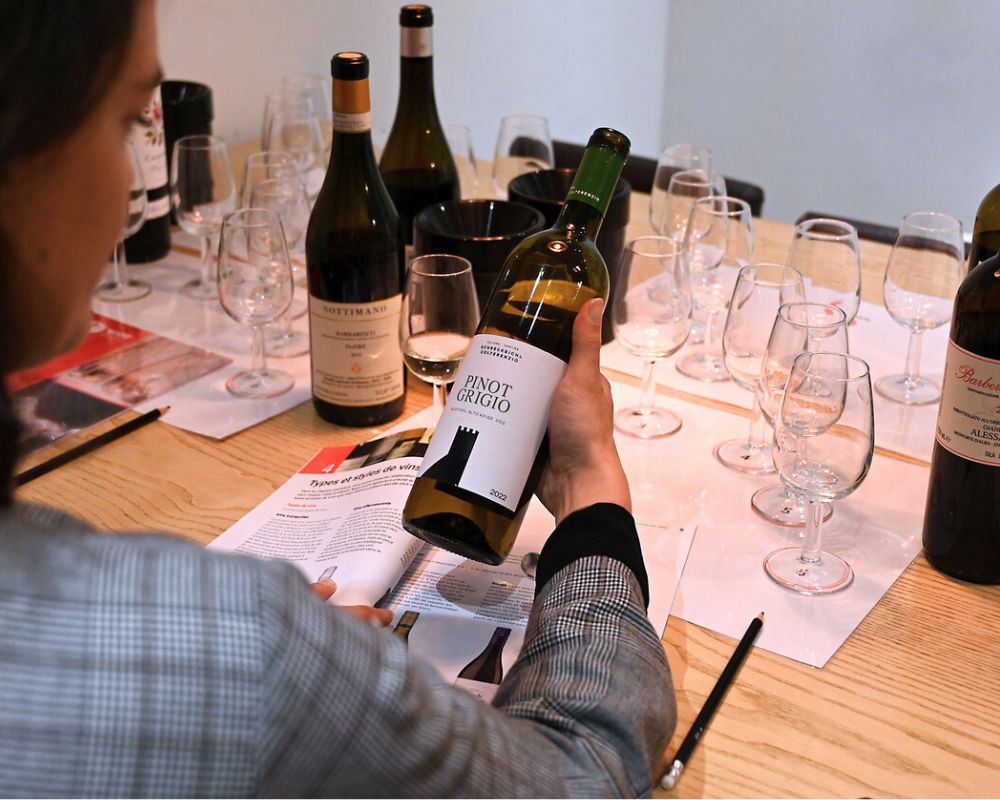
They are also not enough to learn tasting in a truly rigorous way. Listening to a podcast or watching a documentary can provide reference points, but it does not replace a method, regular practice and a structured framework of analysis. In the same way, these resources do not always prepare you seriously for an exam, or for a genuinely professional use of wine. They give you culture, but not always a method.
That is precisely why they are so useful… as complements. They nourish learning, but they do not fully organise it. And it is this limitation that explains why, at a certain level, structured training becomes essential.
6. Why structured training remains essential if you want to go further
Self-learning has real value. It feeds curiosity, keeps the desire to learn alive, and allows you to accumulate a large number of reference points. But it often runs into a very simple limitation: a lot of content, very little structure. You listen, read, watch and retain information… without always knowing how to organise it, rank it or connect it.
That is exactly what a real wine education programme, such as those offered by the WSET, brings. First, it provides progression: you move forward in a coherent order, with foundations, levels and clear objectives. Then, it provides a method: learning about wine is not just about collecting information, but about understanding how to use it. Structured training also helps develop analytical tasting, meaning a rigorous way of observing, describing and interpreting a wine.
It also brings a professional language, which becomes essential as soon as you want to speak about wine with greater precision, whether for your own pleasure, in a professional setting or in preparation for an exam. Finally, it helps you better understand the factors that influence style: climate, grape variety, viticulture, winemaking, ageing and the market. It is this global reading that turns diffuse knowledge into real competence.
This does not mean that training and open-access content should be opposed. On the contrary: podcasts, magazines and documentaries are excellent complements. They enrich, illustrate, embody and extend the learning process. But they deliver their full value when they are part of an already structured framework.
That is exactly what WSET courses at Weeno make possible. They offer a clear path to move from curiosity to a more solid understanding of wine, working at once on general culture, tasting, wine styles and major international reference points. In other words, they do not replace the pleasure of learning on your own: they give it direction, method and real depth.
7. How to build a real wine learning routine
To make progress in wine, the most effective approach is not necessarily to do a lot all at once. It is to do it regularly. In this field, progress often depends less on volume than on repetition, variety of formats and the ability to connect what you are learning.
A simple routine can already make a real difference. For example:
- 1 podcast per week, to train the ear, build vocabulary and maintain curiosity;
- 1 in-depth article, to deepen your understanding of a topic, a region or a trend;
- 1 documentary or 1 episode per month, to visualise terroirs, producers and gestures;
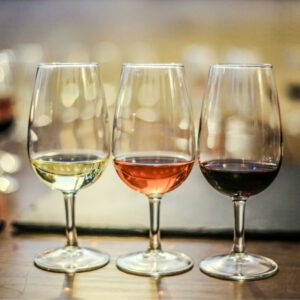
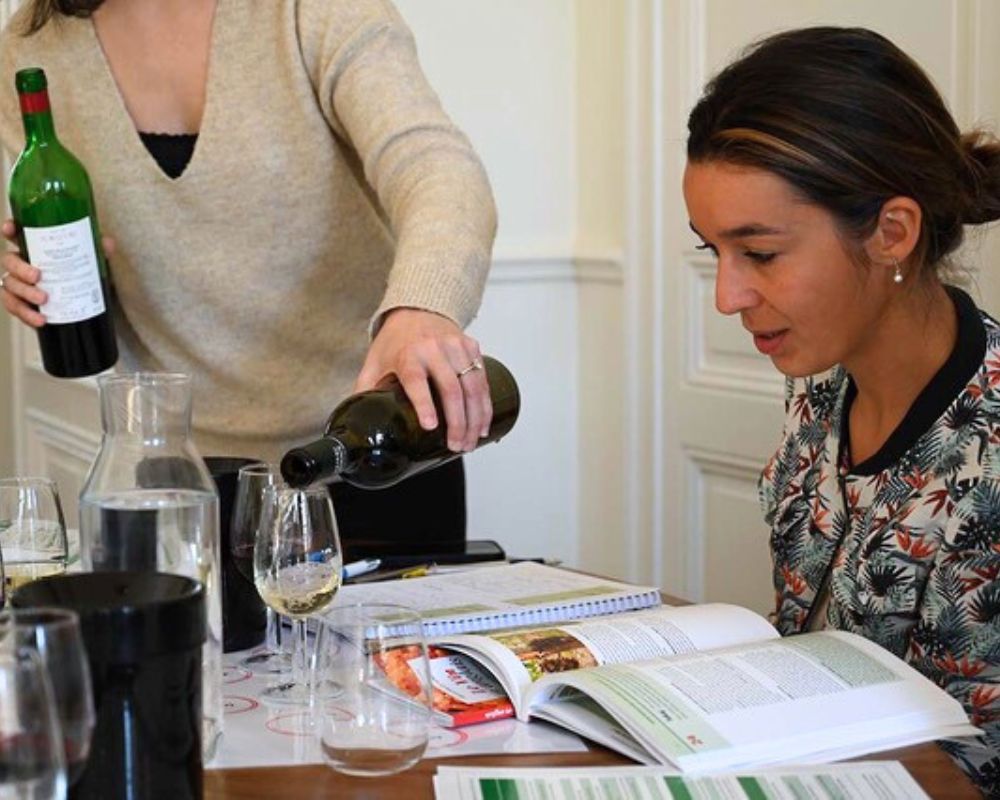
- 1 comparative tasting, to connect theory to the glass and train your reading of style;
- and 1 structured course, to give the whole process a framework and prevent your knowledge from remaining scattered.
This logic works because it is realistic. It allows you to learn without overwhelming yourself, while keeping a regular connection with wine. Above all, it shows that you progress more sustainably with a simple and coherent routine than with occasional bursts of content consumption.In other words, learning about wine requires less massive information intake than a light but consistent discipline. And it is often that regularity that, over time, builds real wine culture.
Wine culture is nourished everywhere, but it needs to be structured somewhere
Yes, it is possible to learn about wine differently. Yes, good podcasts, good magazines, good documentaries and good wine media really do help you progress. They enrich general culture, develop vocabulary, feed curiosity and make you want to go further. But they also have one clear limitation: they nourish learning without always structuring it.
That is where the difference lies. Reading, listening, watching and tasting are all valuable. But to turn that curiosity into a stronger understanding, you also need to learn with method, with a clear progression and a coherent framework.
In other words, wine culture is built everywhere — through reading, listening, images and tasting — but it needs to be structured somewhere. And that is precisely what programmes such as the WSET make possible: they give logic, method and depth to everything you discover elsewhere.
If you would like to go further, the simplest next step is to explore our WSET courses, identify the level best suited to your profile, and speak with our team to build a pathway that fits both your way of learning and your project.