Why rosé returns every summer… and why Provence remains central
Every summer, rosé moves back to the centre of the conversation. On terraces, at the table, by the sea or during sun-filled meals, it becomes an almost immediate reflex. But reducing rosé to a simple seasonal wine would mean missing what really matters. Behind its obvious summer appeal lies a genuine diversity of styles, grape varieties, terroirs and winemaking choices.
In this collective imagination, Provence holds a special place. For many people, it remains the instinctive reference point when talking about Provence rosé or summer rosé wine. Its palette of pale colours, its Mediterranean image and its influence on market taste have made it a central benchmark. Yet here too, simplification often goes too fast. Provence does not produce just one idea of rosé: it produces several readings of rosé. Nor does it stop at that single colour, since its whites and reds also deserve more attention.
That is precisely what this article aims to do. Not to celebrate rosé as a simple symbol of summer, but to better understand what it really expresses. What styles do we find in Provence? Which grape varieties shape these wines? How do terroirs influence their profile? Which dishes do they really work with? And how can we choose them better, beyond image and colour reflexes?
In other words, this article aims to give rosé — and, more broadly, the wines of Provence — their full place as genuine subjects of tasting.
1. Why Provence became the leading reference for rosé
In the world of rosé wine, few regions occupy as central a place as Provence. For a large part of the public, the link is almost automatic: think rosé, think Provence. This association is no accident. It was built through history, the economic weight of the region, a very strong visual identity, and a remarkable ability to impose a style that is immediately recognisable.
That Provençal style gradually established itself around a few markers that have almost become codes: a very pale colour, a sense of freshness, a certain aromatic precision, and a profile often designed for clarity, drinkability and precision. This is not simply a matter of marketing or colour. It is also the result of a natural environment and technical choices that helped make these wines coherent and identifiable.
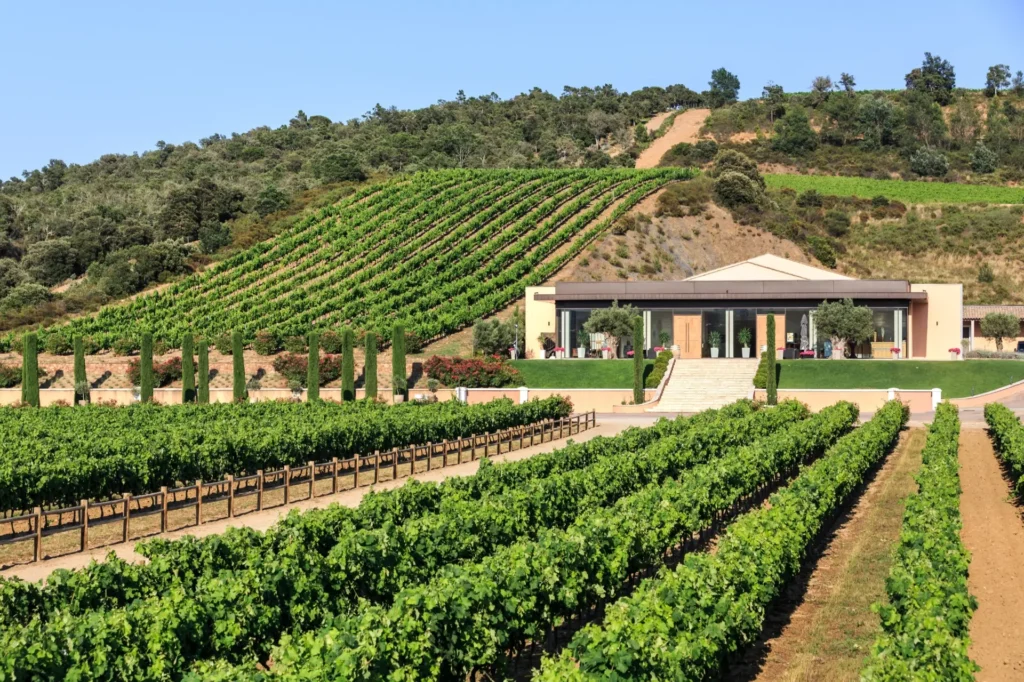
The Mediterranean climate plays an essential role here. Abundant sunshine, maritime influences depending on the area, relative summer dryness and the effects of wind all contribute to a particular ripening pattern for the grapes. To this are added grape varieties well suited to this stylistic logic, such as Grenache, Cinsault, Syrah and Mourvèdre, each bringing its share of fruit, freshness, structure or finesse. Provençal terroir does not produce rosé “by nature”, but it does offer a particularly favourable framework for crafting rosés with a clear identity.
This success had a major consequence: Provence did not just build a regional style, it also helped redefine market expectations. Today, for many consumers, a “good rosé” is still spontaneously associated with certain Provençal codes: pale colour, dry profile, immediate freshness, clean aesthetics. In other words, Provence did not just gain a reputation in rosé; it largely shaped the very way rosé is perceived, expected and judged.
That is precisely why it is worth looking more closely at Provence. Behind this strong image lies a more nuanced reality: several terroirs, several styles, several ways of reading rosé… and a region that deserves to be understood beyond the simple success of its image.
2. Provence rosé: one style, or several styles?
Speaking about Provence rosé in the singular is convenient. But in reality, that simplification hides a more nuanced truth. Yes, there is a shared image of Provençal rosé: a pale robe, a dry profile, a sense of freshness, a form of aromatic precision. But behind this widely shared visual and stylistic identity, there is not just one Provence rosé. On the contrary, there are several ways of making and interpreting rosé, depending on grape varieties, terroirs, winemaking choices and appellations.
The first source of variation lies in the grape varieties. In Provence, rosés are often blends, and each variety plays a very specific role in the final balance.
Grenache generally brings roundness, fruit and a certain generosity, while remaining compatible with rosé styles that are fine and easy to drink.
Cinsault often plays a key role in the search for delicacy: it contributes aromatic finesse, suppleness and a kind of lightness that is particularly prized in Provence rosés.
Syrah can provide more colour, more structure and sometimes a slightly spicier or tauter expression.
Mourvèdre often brings greater depth, more substance and more gastronomic potential, which explains its importance in more structured rosés, especially in more maritime areas.
As for Tibouren, a more confidential but emblematic grape for certain estates, it adds a more singular dimension, often linked to more saline, more delicate or more complex profiles, and allows for a more pointed reading of Provençal rosé.
But grape varieties do not explain everything. Terroirs also play an important role. Between maritime influence, topography, altitude, soil type and exposure, production conditions vary from one zone to another. A rosé from a warmer, more sheltered terroir will not read the same way as a rosé from a more ventilated area or one more marked by proximity to the sea. In the same way, winemaking choices matter enormously: the duration of maceration, the precision of pressing, aromatic protection, the search for tension or texture. These decisions accentuate one or another trait in the final wine.
Appellations also introduce important nuances. A rosé from Côtes de Provence will not necessarily read the same way as a rosé from Bandol, which is more often associated with rosé table wines that are more structured, more vinous and sometimes better suited to ageing. This highlights one essential point: Provence is not a homogeneous block, and Provençal rosé is not a single style reproduced identically.
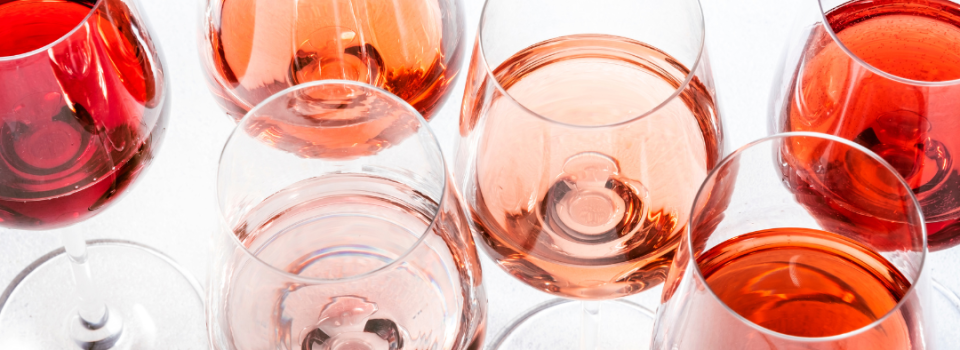
In other words, behind an apparent unity of colour and image lies a real sensory diversity. Some rosés will be more floral, others more fruity, others more spicy, more saline, more taut or broader. That diversity is precisely what makes the subject interesting. Understanding Provence rosé does not simply mean recognising a pale robe or a region. It means learning to read how grape varieties, terroirs and production choices combine to create different styles within the same broad family.
3. How are Provence rosés made?
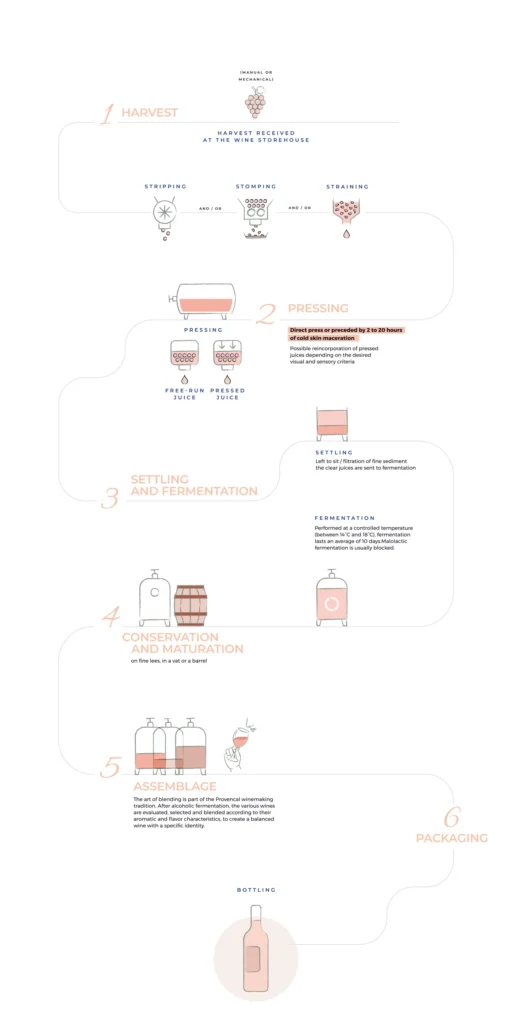
The style of Provence rosé is neither obvious nor “naturally given”. Behind its apparent simplicity lies real precision in winemaking. If these wines manage to combine pale colour, freshness, clarity and balance, it is because they rely on highly controlled technical choices from the very first stages of production.
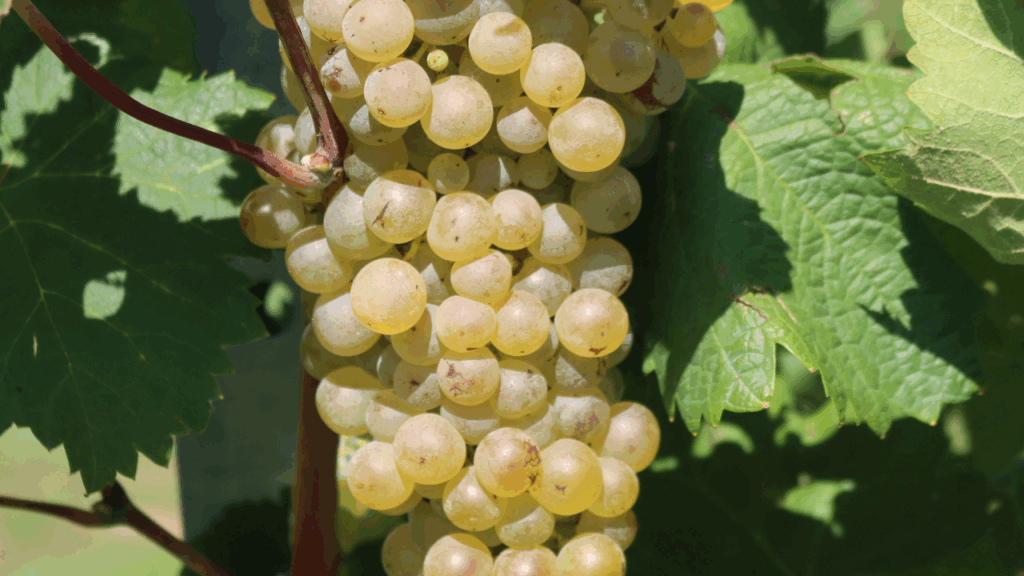
One of the most common methods is direct pressing. Black grapes are pressed quickly after harvest in order to extract very little colour from the skins. This technique produces pale juices and rosés with the light hue that has become one of Provence’s major visual signatures. But this pale colour is not a purely aesthetic goal: it is also part of a search for finesse and precision in the final profile.
Another possible lever is short skin maceration. In this case, the juice remains in contact with the skins for a limited period before pressing. This duration, sometimes very brief, must be controlled with great precision. It allows the winemaker to modulate colour, but also to influence aromatic balance and texture. Here too, everything lies in the dosage: too little and the wine may lack relief; too much and the wine moves away from the intended style.
In Provence rosés, the goal is often to preserve as much freshness and aromatic clarity as possible. This implies particular attention to protecting the must and wine from oxidation, controlling fermentation temperatures, and more broadly doing everything necessary to preserve fruit brightness and precision of profile. Modern Provençal rosé is therefore also a product of precision oenology, in the service of a readable style.
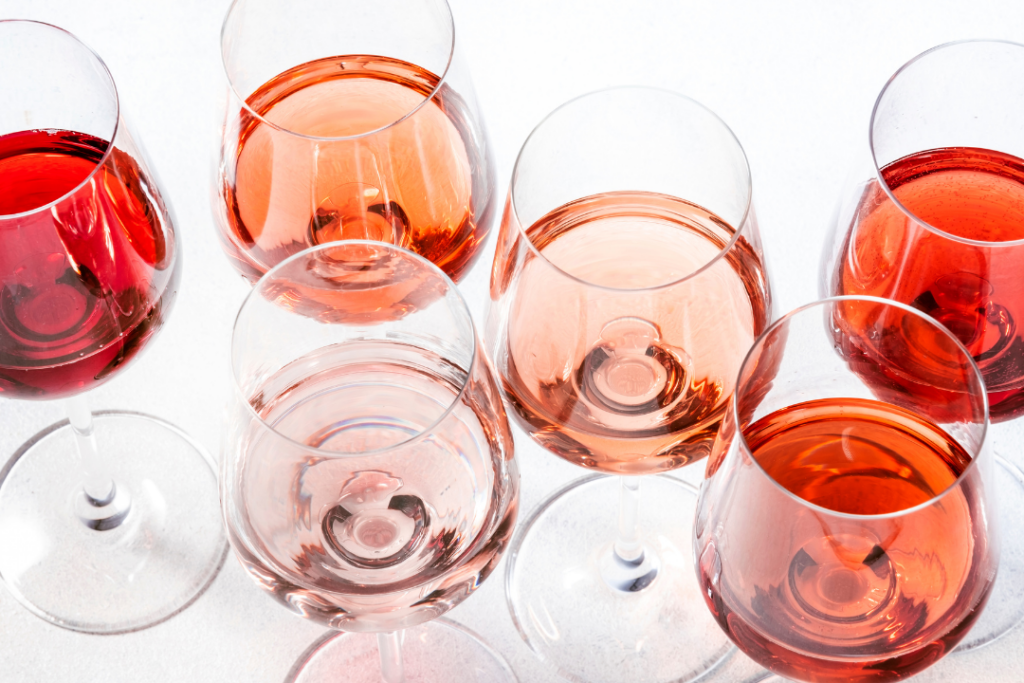
The work on colour is particularly revealing of this technical rigor. In the eyes of the market, the hue of a rosé has become almost as important a stylistic signal as its taste. Yet this colour does not arise mechanically from the grape variety or the region. It results from concrete decisions made in the cellar, concerning the timing of pressing, the duration of skin contact and the conduct of vinification. In other words, the colour of a Provence rosé is already a construction.
That is why technical mastery plays such an important role. Producing a pale, precise and balanced rosé often demands more rigor than it may seem. Freshness must be preserved, heaviness avoided, clarity maintained, while still building a wine that is not simply light, but genuinely coherent. The Provençal style does not appear on its own: it is constructed, and constructed with precision.
Understanding this also changes the way these wines are read. A Provence rosé is not just an “easy” or “obvious” wine. It is often a wine whose apparent fluidity rests on a real technical discipline. And that is precisely what makes it more interesting to read.
4. The main appellations to know in Provence
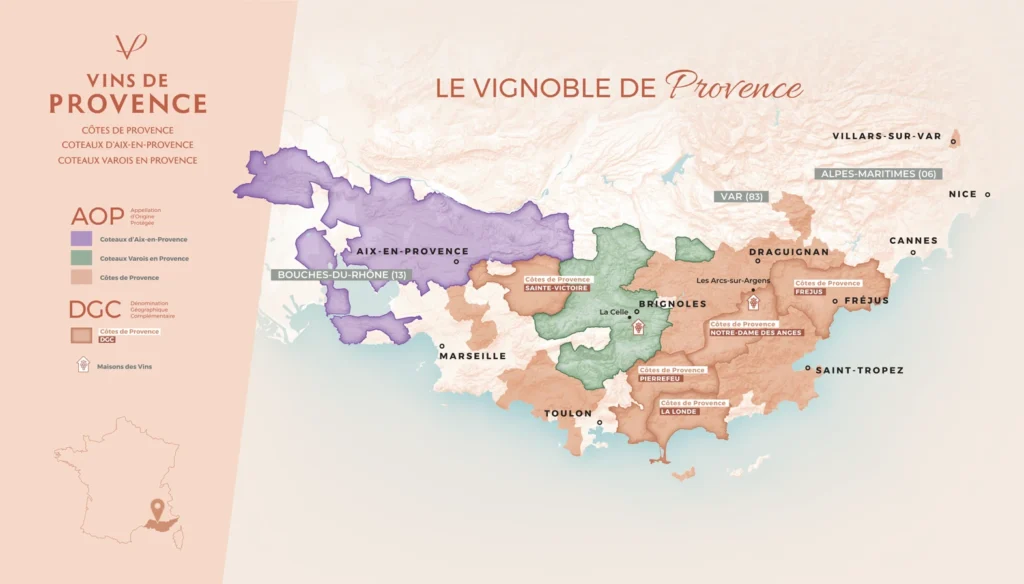
To speak of Provence rosés as a uniform whole would be too simplistic. The region has a strong identity, but it is not a homogeneous block. Between its different appellations, terroirs, exposures, climatic influences and stylistic aims, profiles can vary significantly. Understanding the major Provençal appellations makes it possible to move beyond an overly simplified reading of rosé.
The largest and best known is obviously Côtes de Provence. In the public imagination, it carries the most immediately recognisable image of Provence rosé: pale, dry, fresh, precise, often built around a style that is clear and accessible. But even within this appellation, diversity is real. Its size, the variety of its soils and the plurality of its production zones explain why not all Côtes de Provence taste the same. It is therefore both the most emblematic appellation and the one that best reminds us that Provence covers several realities.
Coteaux d’Aix-en-Provence often offers rosés with a slightly different personality, sometimes a little broader, more structured or more Mediterranean in expression. The influence of the mistral, summer heat and certain blending choices can produce wines that are both fresh and fuller-bodied. The appellation is also interesting because it is not limited to rosé: it reminds us that Provence also produces reds and whites that deserve attention.
Coteaux Varois en Provence is often associated with profiles that are tauter, fresher and sometimes more chiselled. The relative altitude of certain zones and cooler nights can help preserve more acidity and precision. It is a particularly useful appellation for understanding that Provence is not limited to a simply solar logic: freshness has its place there too, and it fully contributes to the balance of the wines.
Bandol occupies a somewhat special role. The appellation is of course famous for its reds, but its rosés are among the most structured and gastronomic in Provence. Often marked by greater depth, more substance and a real capacity to accompany food, they offer a different reading of Provençal rosé. Bandol is very useful for challenging the idea that a Provence rosé must necessarily be light, immediate and intended only for aperitif drinking. Here, rosé can gain seriousness, texture and some ageing potential.
For a more pointed reading, Palette or Cassis are also worth mentioning. Palette, very confidential, illustrates a rarer, more complex, more patrimonial Provence, where styles can be particularly singular. Cassis, for its part, is especially known for its whites, but its existence reminds us that Provence should not be reduced to rosé alone. It is also a region of white wines marked by their Mediterranean and maritime environment, as well as reds that may be less visible but are often very interesting.
In other words, the main Provençal appellations clearly show that Provence is not a homogeneous block. Yes, it has built a strong identity in rosé. But that identity contains several nuances, several intensities, several gastronomic uses and several ways of reading wine.
5. How to choose a Provence rosé according to its style… and what to drink it with this summer
Choosing a Provence rosé should not be limited to looking at the colour of the bottle or reaching for the most familiar label. The real reference point is the style of the wine, and above all the use you want to make of it. A rosé for aperitif, a rosé for a summer lunch and a rosé for a more structured dinner do not necessarily answer the same expectations.
For aperitif
For aperitif, one will often look for a rosé that is very fresh, light, clear and highly drinkable. In this register, the tauter, more floral or citrus-driven styles work particularly well. They easily accompany olives, raw vegetables, a few spreads or simple summer food without saturating the palate. This is the type of rosé that is gladly enjoyed at the beginning of a meal, when freshness and fluidity are the main goals.
For the table
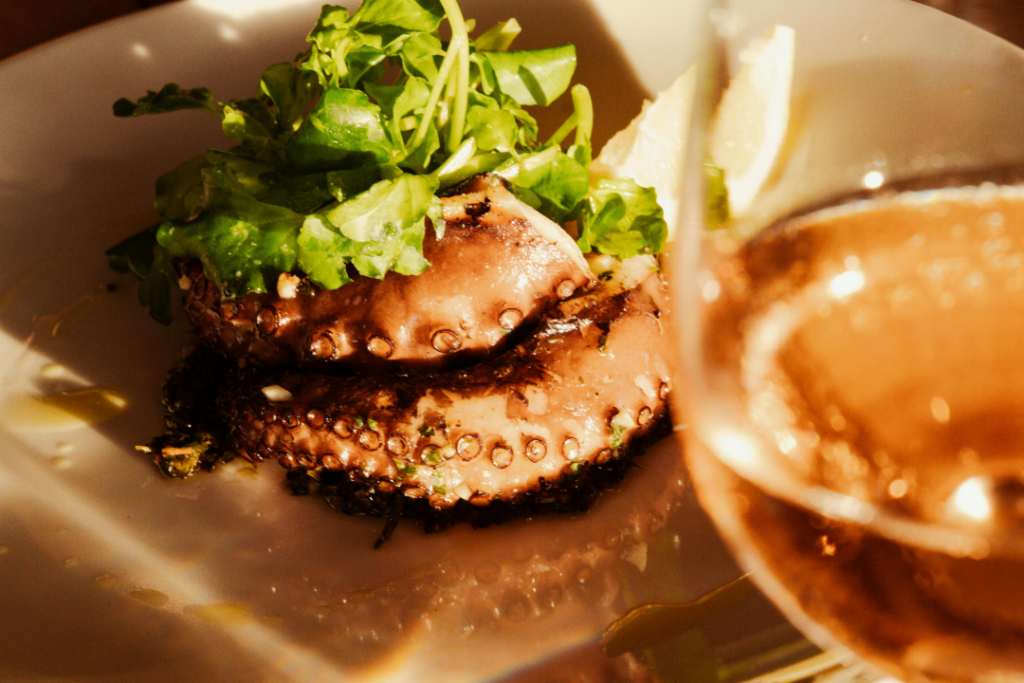
At the table, the question changes slightly. The wine must then be able to accompany a dish, which means it needs more structure, more body or more aromatic intensity. A more vinous rosé, a little more textured, sometimes slightly broader, will often be more relevant. This is especially true with grilled foods, grilled fish, certain dishes from Provençal cuisine or more structured Mediterranean cooking. Here, the rosé should not only refresh; it should also engage with the flavours of the dish.
If you are looking for a very light and fresh style, it is better to turn toward rosés that are precise, dry, not overly marked by body, with good tension and a discreet but clear aromatic expression. These profiles are often perfect for composed salads, crunchy vegetables, simple summer plates or daytime moments when freshness matters above all.
Conversely, if you prefer a more vinous or more gastronomic rosé, it is worth looking at wines that offer more depth, more texture and sometimes a little more power. These rosés pair better with more marked dishes: more elaborate plant-based summer cuisine, fleshier fish, certain grilled white meats, or even lightly spiced dishes. They are also often better suited to dinner, where the rosé must last through the meal rather than simply quench thirst.
This distinction is useful: an ideal rosé for summer daytime drinking is not necessarily the one to choose for a more structured evening meal. During the day, one may prefer immediate freshness, drinkability and lightness. In the evening, one may seek a bit more relief, presence and complexity. That does not mean one style is superior to the other, only that they do not answer the same moment of consumption.
When it comes to summer pairings, Provence rosés show precisely how versatile they can be. They naturally match many kinds of warm-weather cuisine:
- grilled foods, provided they do not become too heavy;
- Mediterranean cuisine, with its herbs, vegetables and olive oil;
- composed salads, as long as the wine retains enough freshness;
- grilled fish, which often benefits from finer, more precise rosés;
- Provençal cuisine, which almost feels like an obvious regional pairing;
- lightly spiced dishes, if the rosé keeps enough fruit and suitable structure;
- and more broadly all kinds of vegetable-driven summer cuisine, provided the wine remains precise enough not to overwhelm the delicacy of the dish.
In other words, choosing a good Provence rosé first means understanding what style it belongs to, and then placing it in a moment and a use. That is the reading that allows us to move beyond a simple seasonal reflex and into a true tasting choice.
6. What Provence rosé helps us understand about wine… and why learning to read it really changes tasting
Provence rosé is often perceived as an obvious wine: pale, fresh, summery, immediately readable. And that is precisely why it is such a good learning ground. Behind that apparent simplicity, it actually makes it possible to understand several fundamental mechanisms of wine, and therefore to progress in a very concrete way in reading styles.
It first allows us to grasp the influence of climate. In Provence, the Mediterranean climate does not simply produce an image of summer wine: it directly influences grape ripeness, the balance of the wine, the sense of freshness being sought, and the way fruit expresses itself. Reading a Provençal rosé already means understanding that a wine is always the result of an environment.
It also helps us better understand the role of grape varieties. Grenache, Cinsault, Syrah, Mourvèdre or Tibouren do not produce the same balance. Some bring more fruit, others more finesse, structure or relief. Rosé thus becomes a very good support for learning that a wine’s style is never linked only to a colour or a region, but also to a precise combination of varieties and blends.
Another highly instructive point is the impact of vinification. With Provence rosés, it becomes clear that style is not only given by nature, but constructed through technical decisions. Direct pressing, short maceration, aromatic protection, colour management, the search for freshness and precision: all of this shows how human intervention contributes to shaping the final result. It is an excellent case study for understanding the link between production method and sensory profile.
Provence rosé also helps develop a real reading of style. It teaches us to observe what connects colour, texture, acidity, aromatic intensity and gastronomic use in a wine. A very pale rosé is not necessarily superior to another one. A lighter rosé does not fulfil the same function as a more vinous rosé. Reading rosé seriously therefore means learning not to stop at image, but to connect visual, sensory and structural clues in order to understand the wine as a whole.
That is also why learning to read rosés genuinely changes tasting. Rosé is an excellent learning ground precisely because it forces us to move beyond the most superficial reflexes. We go from reading by colour or reputation to reading by style, balance, production context and table use. And that shift in perspective is valuable: it allows us to better understand not only rosé, but wine more generally.
Within this logic, structured programmes such as the WSET play a decisive role. They help put words on what we perceive, organise reference points, connect climate, grape varieties, vinification and style, and learn to taste with a more solid method. That is precisely what paths like the WSET provide: a clear framework for understanding wine styles beyond their image.
In other words, learning to read Provence rosés does not simply mean choosing a better bottle for summer. It is also a very effective way of learning to read wine more broadly. And that is exactly what makes this subject so interesting within a wider educational approach.
Provence rosé: more than a summer wine, a real subject of tasting
Provence rosé occupies a central place in the imaginary world of summer wine, but it would be reductive to stop at that image alone. Provence is indeed a major reference, but it is not a uniform whole. Its appellations, grape varieties, terroirs and winemaking choices reveal, on the contrary, a real internal diversity, which deserves to be read with more precision.
Understanding Provence rosés better also means knowing how to choose them better and pair them better. It means learning to go beyond colour or image, and entering into a real reading of style, structure and gastronomic use. It is often at that point that rosé becomes more fascinating: when it stops being only a summer reflex and becomes a genuine tasting subject.
If you would like to go further, the simplest next step is to discover our courses, learn how to read styles with more method, and deepen your understanding of wine within a more structured tasting framework.