
IPA: three letters that have become impossible to ignore
Today, it is almost impossible to talk about craft beer without mentioning IPA. Found on the menus of craft beer bars, in specialist bottle shops and at the heart of many brewery ranges, India Pale Ales have become one of the most recognisable beer styles in the modern brewing landscape.
And yet, IPA is neither a recent creation nor a style born with the American craft beer revolution. Its history goes much further back, and it is also far more nuanced than the often-repeated story of “a beer invented to survive the journey to India”.
To understand why IPA has become so successful, we need to return to its British origins, the role of hops and colonial trade, before looking at its dramatic reinvention in the United States.
From English IPA to West Coast IPA, from NEIPA to Double and Session IPA, the style has since evolved into a wide range of expressions.
So why has IPA become so popular? And more importantly, how can you learn to tell these styles apart in the glass? That is what we are going to explore here, as well as we do in our WSET in Beer courses.
1. What does IPA mean?
IPA stands for India Pale Ale. The style belongs to the wider family of British Pale Ales, top-fermented beers that were historically paler than many older ale styles and often characterised by a more pronounced hop presence.
Over time, some of these Pale Ales intended for export were brewed with higher hopping rates and often developed a drier, more structured profile. The word “India” comes from the commercial link with British India, where these beers were shipped and consumed by British communities.
But it is important to avoid oversimplifying the history: IPA did not suddenly appear as a single recipe “invented to survive the journey to India”.
Its emergence was more gradual, developing from beers that were already highly hopped and suitable for export.
Trade with India helped establish the style, reinforce its reputation and, eventually, give it the name by which we know it today.
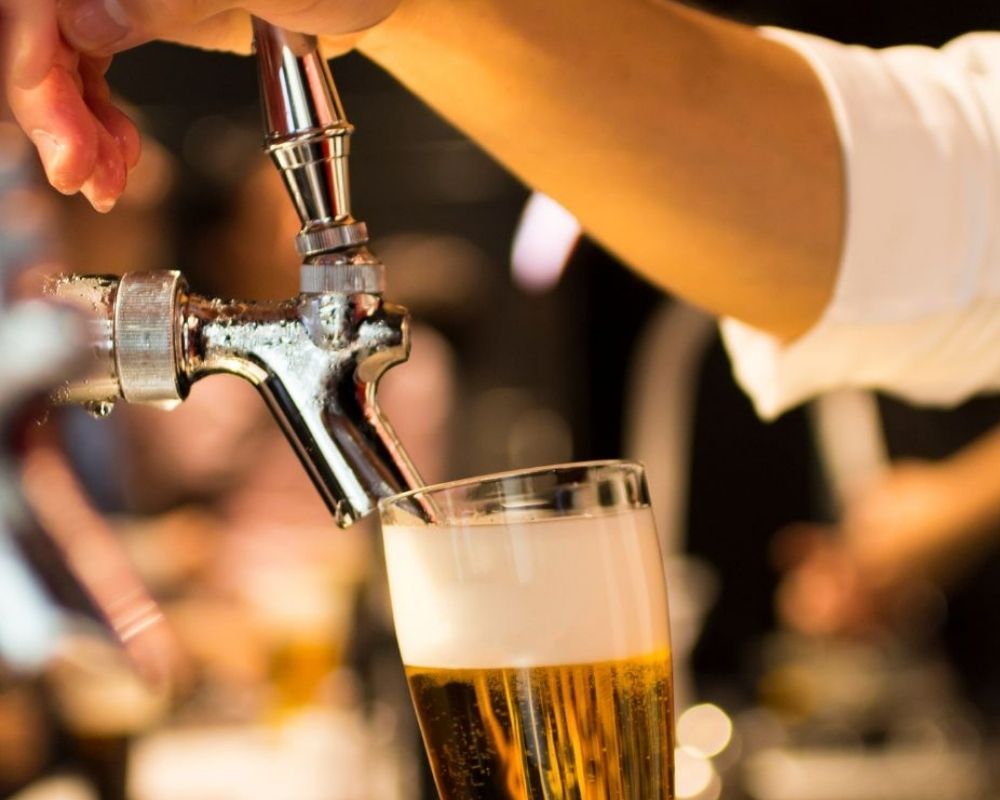
2. The history of IPA: between British trade and popular myth
The history of IPA begins before the term India Pale Ale was even widely used.
By the 18th century, improvements in malting technology made it possible to produce paler malts and therefore lighter-coloured beers. Pale Ale already existed as a British beer category, with profiles that were generally drier and more heavily hopped than some darker ale styles.
At the same time, the British Empire was expanding its trade with India. Beers shipped over long distances had to cope with months of transport, temperature fluctuations and difficult storage conditions.
Hops played an important role because of their antimicrobial properties, while a higher alcohol level could also contribute to the beer’s stability.
This is where the famous story began: the idea that IPA was “invented” specifically to survive the journey to India.
The reality is more nuanced.
Highly hopped beers were already being brewed and exported before IPA was clearly defined as a distinct style. Rather than being a sudden invention attributed to one brewer, IPA developed through a gradual evolution shaped by trade practices, consumer preferences and the growing reputation of certain beers exported to India.
In other words, British trade did not create IPA overnight. It helped shape, define and popularise a style that would later go through several major revivals.
3. Why are IPAs so heavily hopped?
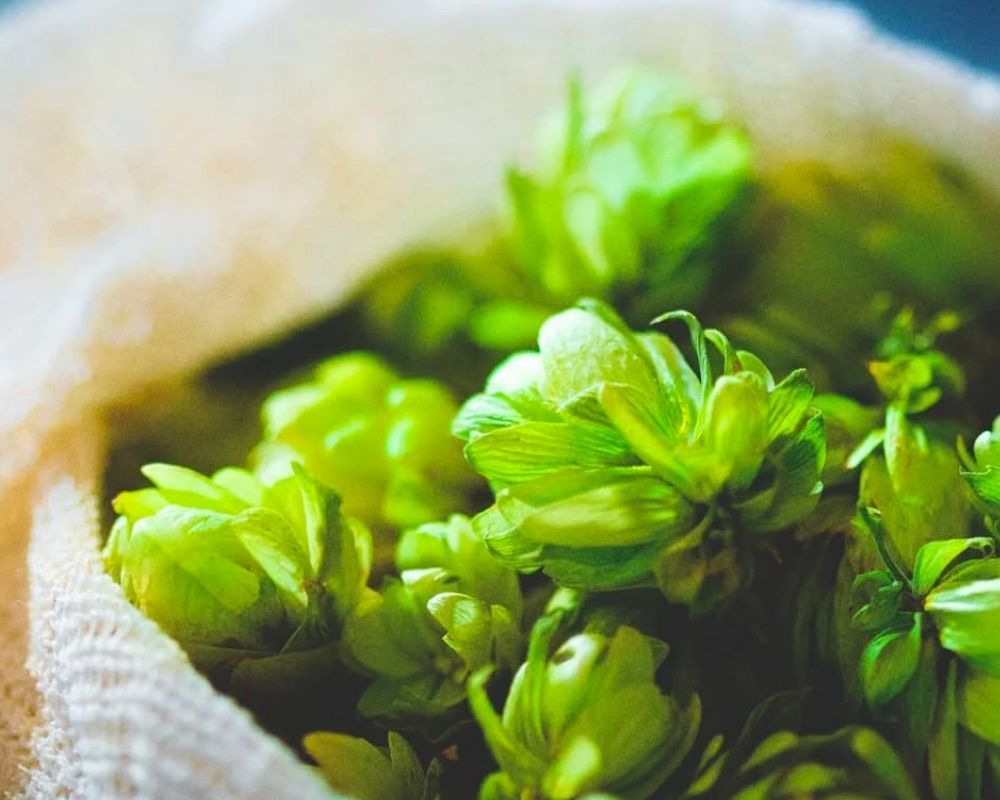
Hops sit at the heart of the IPA style, but their role goes far beyond bitterness.
Historically, hops also contributed to the microbiological stability of beer, which partly explains why they were so important in beers intended for long-distance transport.
Today, brewers use both hop variety and timing of addition to shape aroma and flavour.
Hops added early in the boil contribute mainly to bitterness. Later additions preserve more of the hop’s aromatic compounds.
Dry hopping involves adding hops after the boil, often during or after fermentation, to increase aromatic intensity without adding as much bitterness.
Depending on the variety, hop aromas can range from:
- citrus;
- resin;
- pine;
- tropical fruit;
- stone fruit;
- herbs;
- flowers.
As with grapes, variety and origin matter.
Some American hops are particularly expressive in citrus or tropical fruit, while hops from other regions may show more floral, herbal or spicy profiles.
The key point is simple: an IPA is not just “more hopped” in a uniform way.
Its final style depends on the amount of hops used, but also on the timing of additions, the chosen varieties and the extraction technique.
4. From the UK to the United States: the revival of IPA
After its rise in the UK, IPA went through a period of relative decline during the 20th century, as lighter and more accessible beer styles became more popular.
For several decades, IPA remained mainly associated with a quieter British brewing tradition.
The major turning point came in the United States, with the rise of the craft beer movement from the 1970s and 1980s onwards.
American brewers took the idea of IPA and reinterpreted it using highly expressive American hop varieties and a much bolder aromatic approach.
Hops such as Cascade, Centennial, Citra and Mosaic became emblematic of this new generation of beers.
They brought more intense aromas of:
- citrus;
- resin;
- pine;
- tropical fruit;
often alongside a more pronounced bitterness than in traditional British versions.
This is where IPA changed status.
It was no longer simply a historic beer style; it became a creative playground for brewers and one of the defining symbols of craft beer culture.
American brewers did not invent IPA, but they reinvented it for a new generation of drinkers.
That reinterpretation then spread around the world. From Europe to Australia and across Asia, breweries adopted the style and created countless modern variations.
5. IPA, West Coast, NEIPA, Double IPA… why are there so many styles?
Talking about “IPA” as if it were a single style is now almost too simplistic.
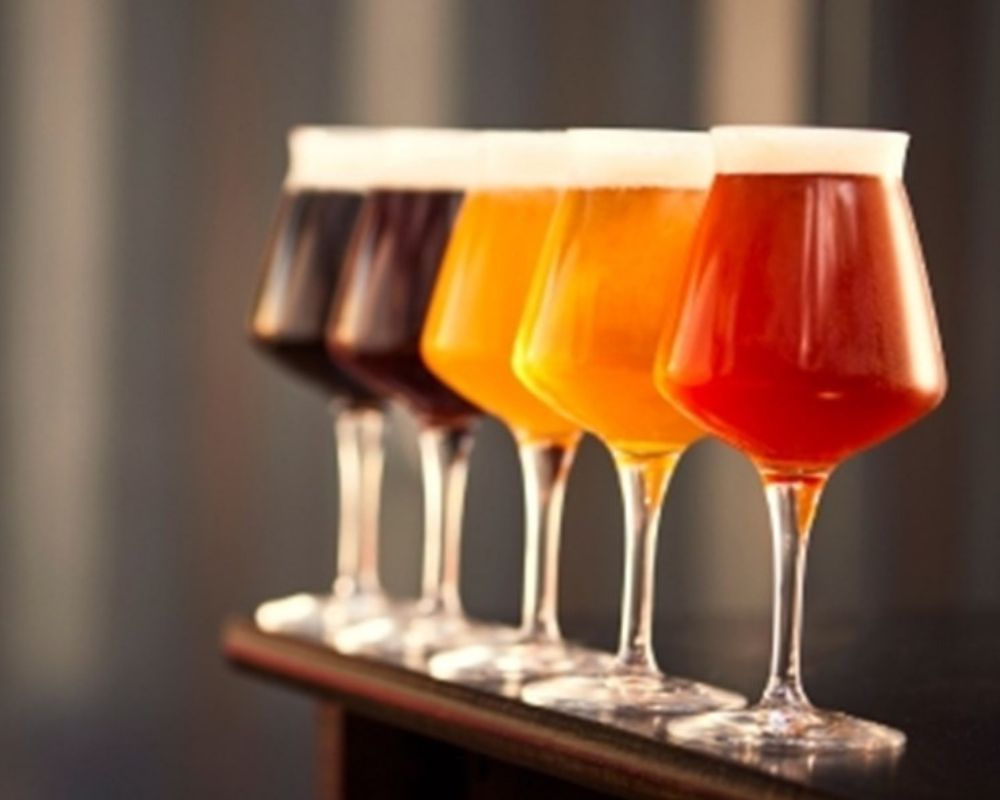
The category has diversified so much that an English IPA, West Coast IPA or NEIPA can offer completely different sensory profiles.
English IPA
An English IPA is usually more balanced between malt and hops.
The malt can be more noticeable, with biscuit or bread-like notes, while the hops often contribute earthy, floral or spicy characters.
Bitterness is present, but generally integrated into a more traditional structure.
American IPA
An American IPA places more emphasis on hops.
Typical profiles often include citrus, resin, pine and tropical fruit, with a drier palate and more pronounced aromatic intensity.
West Coast IPA
A West Coast IPA pushes this style even further.
It is typically clear, dry and firmly bitter, with a clean finish and strongly resinous and citrus-driven hop expression.
Here, the hop character is expected to be precise, direct and structurally important.
New England IPA / Hazy IPA
At the other end of the spectrum, a NEIPA or Hazy IPA focuses on a rounder texture, hazy appearance and intense tropical fruit aromas.
Heavy use of late hopping and dry hopping boosts aromatic expression while often creating a softer perception of bitterness.
Double / Imperial IPA
A Double IPA raises the intensity again:
- higher alcohol;
- more concentration;
- more malt to support the structure;
- very high hop intensity.
Alongside these major categories, you will also find styles such as:
- Session IPA, lower in alcohol;
- Black IPA, dark in colour but heavily hopped;
- Cold IPA, a more recent interpretation that often aims for very clean fermentation and precise hop expression.
This diversity shows one thing clearly:
IPA has become a platform for brewing creativity, far more than a single fixed recipe.
6. Why have IPAs become so successful?
The success of IPA does not come from one single factor.
It comes from a combination of aromatic intensity, brewing creativity and craft beer culture.
First, IPA is highly recognisable.
Its aromas of citrus, resin, tropical fruit and pine create an expressive profile that is relatively easy for consumers to identify.
That recognisability has played a major role in its success.
Second, it is an extremely creative style.
Brewers can experiment with:
- hop varieties;
- hop origins;
- dry hopping;
- fermentation;
- texture;
- bitterness levels.
As a result, one IPA can be dry and sharp, another hazy and juicy, another light and refreshing, and another intensely powerful.
The craft beer movement also played a central role.
IPA became almost an emblem of independent brewing, with breweries using it as a key space for innovation.
Marketing strengthened the effect further:
- bold can designs;
- memorable names;
- storytelling around hop varieties;
- limited-edition releases.
Hop breeding and varietal innovation have also kept consumer interest high, with new varieties appearing regularly and bringing different aromatic profiles.
Finally, IPA appeals strongly to people who enjoy analytical tasting because it invites comparison between:
- hops;
- regions;
- techniques;
- fermentation styles;
- textures;
- bitterness levels.
In short, IPA has become a field of experimentation as much as a beer style.
If you would like to discover more about beer, go check out our blog post to get all you need to know about beer!
7. IPA is not just about bitterness
Reducing IPA to bitterness alone means missing a large part of what defines the style.
A successful IPA depends on the balance between several elements:
- malt;
- alcohol;
- bitterness;
- aromatic intensity;
- texture;
- carbonation;
- finish.
Two beers can use highly expressive hops and still feel completely different in the glass.
A West Coast IPA, for example, will often aim for a dry palate, firm bitterness and a clean finish.
A NEIPA, by contrast, may be rounder, fruitier and softer in perceived bitterness, with a fuller texture.
This is where an analytical approach becomes particularly useful:
intensity does not automatically mean balance, and balance does not automatically mean quality.
A highly aromatic beer can still lack precision.
A very bitter IPA can be perfectly balanced if the malt, alcohol and texture support it.
Conversely, a less intense beer may feel more harmonious.
To assess IPA properly, you need to consider how all of the elements work together in the glass.
8. How to taste an IPA like a professional
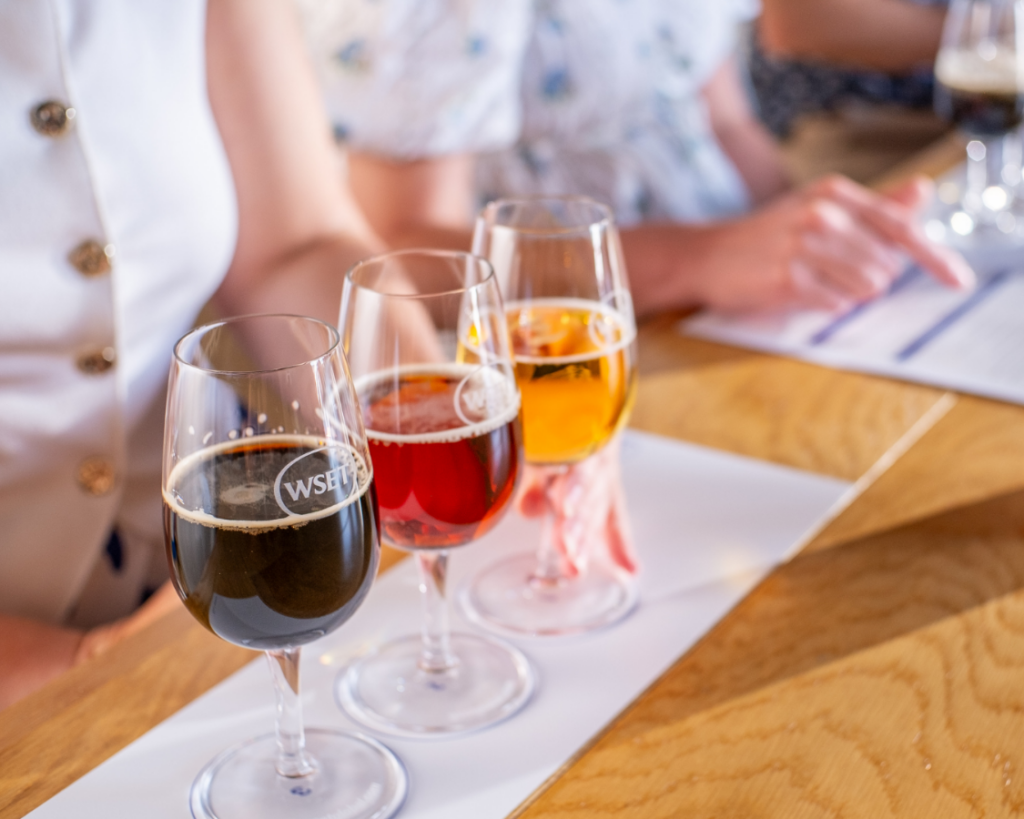
Tasting IPA professionally means going beyond the simple reaction of “I like it” or “I don’t like it”.
The aim is to understand how the style has been constructed and whether its different components work together.
And this is exactly what we do in our WSET in Beer courses with our new educator, Julia Charlotte Basso.
Start with the appearance:
- Is the beer clear or hazy?
- What colour is it?
- Is the head persistent and even?
These first clues can already point towards a particular IPA style.
On the nose, try to separate what comes from:
- hops;
- malt;
- fermentation.
You may find citrus, resin, tropical fruit, bread, biscuit or fruity esters.
You should also remain alert to any faults.
On the palate, analyse each component separately:
- sweetness;
- acidity;
- bitterness;
- alcohol;
- body;
- carbonation;
- length.
Then ask yourself how these elements interact.
Finally, assess quality through:
- intensity;
- complexity;
- aromatic precision;
- balance;
- persistence.
One particularly important point with IPA is freshness.
Hop aroma compounds can evolve quickly, lose intensity or become less precise over time.
To assess an IPA properly, you therefore need to consider both its intended style and its current state of freshness.
9. IPA and food pairing: why does it work so well?
IPA can be particularly interesting at the table because it combines several sensory elements:
- bitterness;
- aromatic intensity;
- carbonation;
- and, in some cases, relatively high alcohol.
With rich or fatty dishes, carbonation can provide freshness, while bitterness can help lighten the overall sensation on the palate.
With spicy dishes, citrus, resinous or tropical fruit aromas can create highly expressive pairings — although alcohol must also be taken into account, as it can intensify the sensation of heat.
A few effective examples:
- West Coast IPA + burger or grilled meat: bitterness and resinous notes work well with char and fat.
- NEIPA + tacos or spicy food: intense fruit and a rounder texture can pair well with spice.
- IPA + mature cheddar: hop intensity can match the character of the cheese.
- American IPA + curry: citrus and tropical fruit can provide an interesting contrast with spices.
As always, the aim is not to follow rigid pairing rules, but to find a balance between the intensity of the dish, bitterness, alcohol and the beer’s aromatic profile.
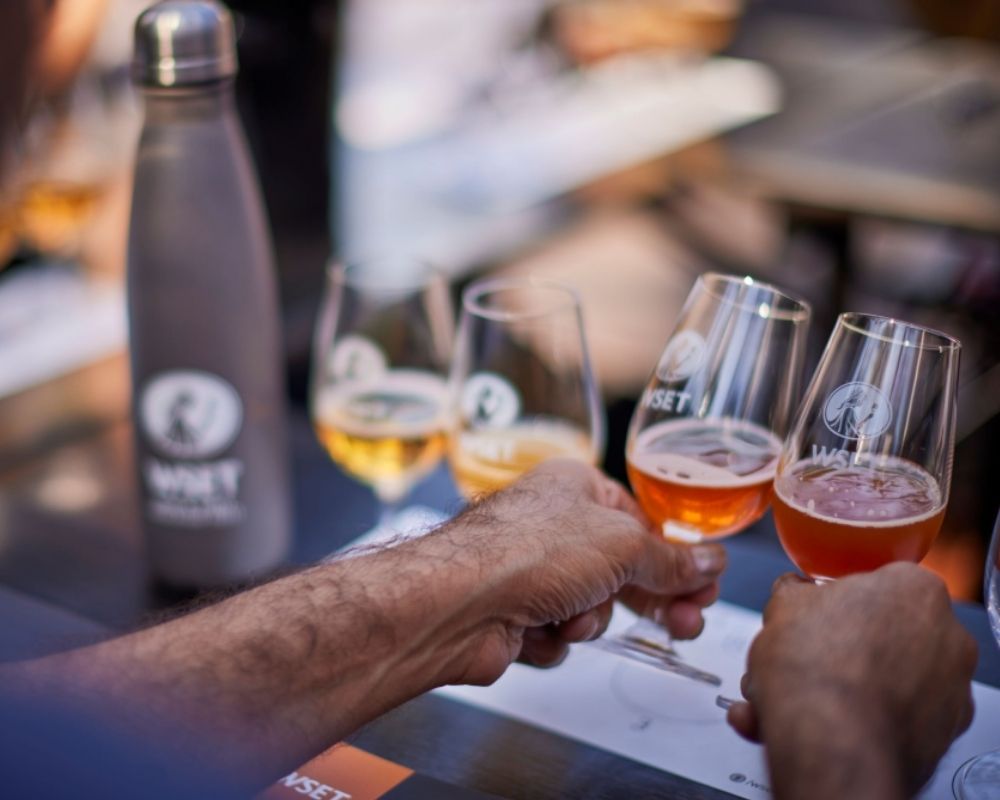
This is what we do in our WSET in Beer trainings. If you would like to know more about this, we wrote a full blog post over here.
Understanding IPA means understanding modern beer
Understanding IPA is not about memorising a list of hop varieties.
It is about understanding how the brewer’s choices show up in the glass.
IPA gives you access to many of the essential mechanisms of brewing:
- hop selection;
- timing of hop additions;
- dry hopping;
- the role of malt;
- fermentation;
- bitterness;
- texture;
- balance;
- structure.
It is also an excellent style for developing more precise sensory analysis, helping you distinguish between aromatic intensity, quality, freshness and balance.
In many ways, IPA reflects the recent evolution of beer itself:
British origins, dramatic reinvention in the United States, and then global expansion into a wide range of modern styles.
Today, from West Coast IPA to NEIPA, from Double IPA to lighter versions, this family remains one of the best entry points for understanding contemporary brewing creativity.
If you want to take your beer knowledge further, our next beer training sessions in Paris take place in October:
📍 Paris
📅 18 October
📅 19–21 October
👉 Discover our next beer training sessions in Paris and learn how to analyse beer styles, ingredients, production methods and quality using a structured, professional approach.